
The way audiences consume content has drastically evolved. Today, people no longer want to passively watch videos — they want to interact, engage, and be part of the conversation. This growing demand has given rise to Video&A, a format that combines video streaming with real-time question-and-answer sessions.
For businesses, educators, and creators, Video&A is a game-changing tool that drives authentic communication, boosts engagement, and builds stronger customer relationships. In this article, we’ll explore what Video&A is, how it works, the technology behind it, its business applications, and the future of this powerful format.
What is Video&A?
Video&A stands for Video and Answers — an interactive content format that merges video broadcasting with live audience Q&A. Unlike traditional video, which is one-way communication, Video&A creates a two-way dialogue where audiences can ask questions, share opinions, and get real-time responses.
It can be used for live product launches, online classes, investor calls, healthcare awareness programs, entertainment shows, and more.
How Video&A Works
- Host Prepares Content – A brand, teacher, or creator sets up a video session.
- Live Streaming Begins – The session starts with video broadcasting to an audience.
- Audience Participation – Viewers can ask questions via chat, polls, or interactive Q&A features.
- Real-Time Answers – Hosts or panelists respond instantly, creating a conversational flow.
- Analytics Collection – Post-event, companies gather engagement data, common questions, and user behavior insights.
This interactive cycle makes Video&A more impactful than passive video content.
The Technology Behind Video&A
Video&A runs on a combination of video streaming and real-time interaction technologies:
- Live Video Streaming Protocols: WebRTC, RTMP, and HLS ensure smooth live broadcasting.
- AI-Powered Moderation: AI tools filter questions, highlight trending queries, and block spam.
- Cloud Infrastructure: Scalable cloud servers allow thousands of simultaneous viewers.
- Interactive Features: Chat, polls, emojis, and smart Q&A tools improve engagement.
- Analytics & CRM Integration: Data is connected to business systems for lead generation and customer insights.
Emerging technologies like AI, AR/VR, and 5G networks will make Video&A even more immersive and personalized.
Leading Companies & Platforms in Video&A
While Video&A is still an emerging field, several companies and platforms are shaping the space:
- Zoom & Microsoft Teams – Offer live video sessions with Q&A features for enterprises.
- Hopin & Airmeet – Virtual event platforms with real-time audience interaction.
- YouTube Live & LinkedIn Live – Support live Q&A during broadcasts for creators and brands.
- Slido & Mentimeter – Provide interactive Q&A and polling integrations with video events.
- Specialized Startups – New companies are building Video&A-first platforms with AI-enhanced interactivity.
How Businesses Can Use Video&A
- E-commerce & Retail: Host live shopping events where customers ask questions before purchasing.
- Education & Training: Conduct interactive online classes, workshops, and professional development programs.
- Healthcare: Enable doctors to conduct live Q&A health awareness sessions.
- Corporate Communication: Engage employees, investors, and stakeholders in real-time.
- Entertainment & Media: Run celebrity Q&As, fan engagement sessions, and interactive shows.
Benefits of Video&A for Brands
- Increased Engagement – Audiences stay longer and interact more.
- Higher Conversions – Instant answers reduce buying hesitation.
- Customer Insights – Live questions reveal real customer pain points.
- Brand Trust & Loyalty – Direct communication fosters stronger relationships.
- Scalable Reach – Businesses can engage with hundreds or thousands simultaneously.
Future of Video&A
The global interactive video market is expected to surpass $78 billion by 2027, and Video&A will play a key role in this growth. Future innovations include:
- AI Hosts & Chatbots answering questions alongside humans.
- AR/VR Video&A for immersive customer experiences.
- Automated Question Summaries for post-event reports.
- Global Reach with Instant Translations powered by AI.
Video&A is not just a trend — it’s the next frontier of digital engagement.
How to Host Your First Video&A Session (Step-by-Step Guide)
- Choose the Right Platform
- Pick a tool that supports video + Q&A features (Zoom, Hopin, YouTube Live, LinkedIn Live, etc.).
- Plan Your Session
- Define your goal (product launch, training, awareness, customer support).
- Prepare a content outline with key talking points.
- Promote the Event
- Share invitations on social media, email, and your website.
- Encourage users to submit questions in advance.
- Set Up Technology
- Ensure good camera, mic, and internet connection.
- Test platform features (polls, chat, Q&A tools).
- Engage During the Session
- Greet participants warmly.
- Mix short video content with live interaction.
- Answer questions clearly and encourage participation.
- Leverage Analytics After Session
- Review engagement reports (questions, watch time, audience behavior).
- Follow up with attendees via emails, highlights, or offers.
- Use insights to improve your next Video&A event.
Video&A vs Traditional Video (Effectiveness)
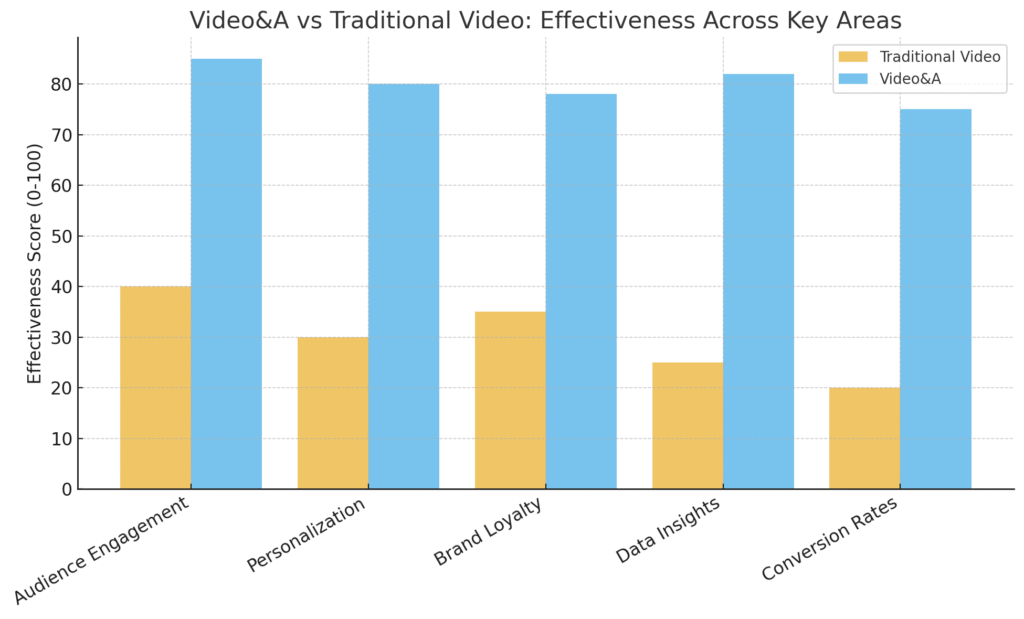
The chart below shows how Video&A delivers superior performance compared to traditional video formats:
???? Video&A is nearly twice as effective in driving engagement and conversions.
FAQs on Video&A
What makes Video&A different from webinars?
Video&A focuses on interactive dialogue, whereas most webinars are presentation-heavy with limited interaction.
Do I need special tools to host Video&A?
Yes, you need a platform that supports live video + real-time Q&A features (Zoom, Hopin, YouTube Live, etc.).
Can small businesses use Video&A?
Absolutely! Small businesses can use Video&A for product demos, customer support, and community engagement without huge budgets.
Is Video&A only for live sessions?
Mostly yes, but recordings can be repurposed into interactive replays where viewers can browse FAQs from past sessions.
What industries benefit most from Video&A?
E-commerce, education, healthcare, corporate communications, and entertainment are the leading adopters.
Conclusion
Video&A is revolutionizing how businesses connect with audiences. By blending video storytelling with interactive dialogue, it enables brands to build trust, engage customers, and drive real growth.
As technology evolves, Video&A will become an essential part of content marketing, customer engagement, and digital strategy. The businesses that adopt it early will lead the way in creating personalized, interactive, and future-ready experiences.
Keep Reading:
- High Ticket Affiliate Marketing: The Ultimate Guide to Earning Big in 2025
- Nano Banana AI: What You Actually Need to Know
- Apple iPhone 17, iPhone 17 Air Release Date: New Report Specifies Key Dates
- Samsung Foundry & Tesla $16.5 Billion Deal for AI6 Chips – Market Impact & Investment Outlook
- Amazon Doubles Down on Anthropic with an $8 Billion Investment

