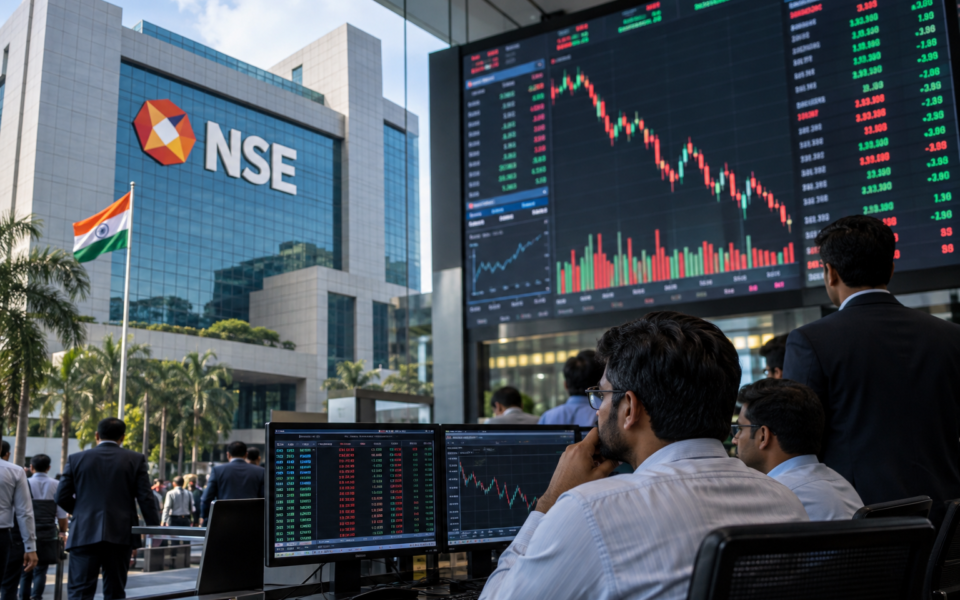
A UPI-style cross-border payment architecture could quietly reshape global trade, reduce dependence on the U.S. dollar and accelerate the transition from a Western-led financial order to a multipolar economic system.
THE FOUNDERS MAGAZINE | EXCLUSIVE ANALYSIS
New Delhi | September 2026
For decades, global economic power has travelled through a remarkably simple highway: the U.S. dollar.
A company in India buying machinery from Brazil, a trader in the Middle East purchasing goods from China, or an African importer paying a supplier thousands of kilometres away could conduct business between two countries with no direct connection to the United States — yet the transaction might still pass through dollars, correspondent banks and international financial infrastructure heavily influenced by Western institutions.
BRICS is now trying to change that architecture.
And it may ultimately prove more consequential than simply creating another currency.
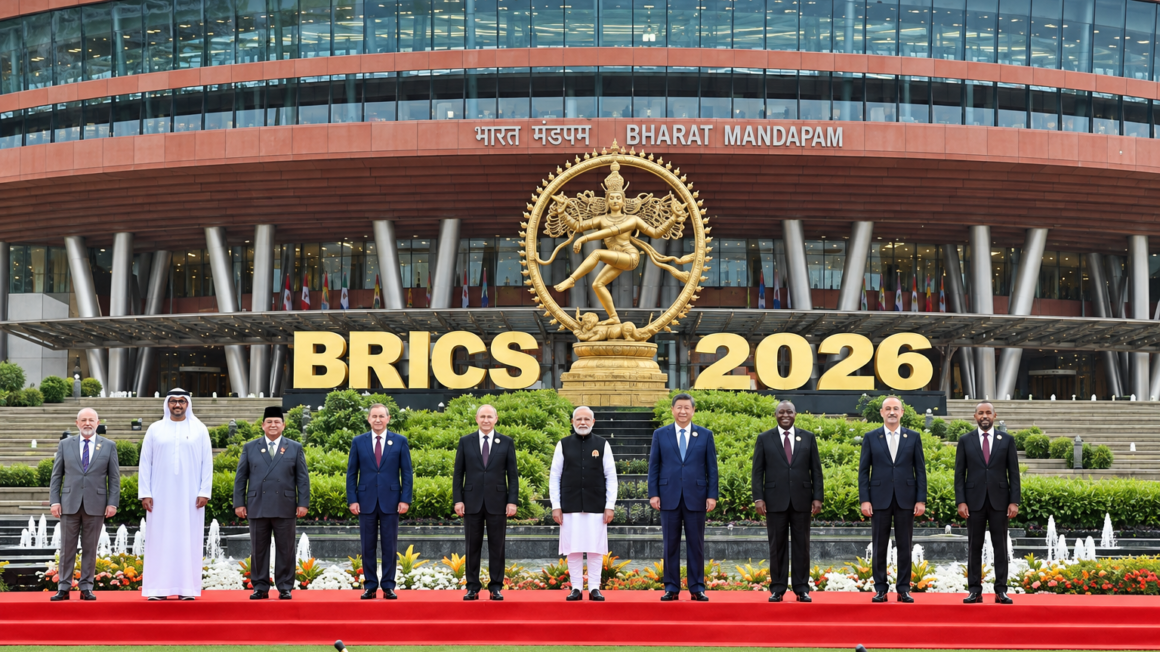
At the 2026 BRICS Summit in New Delhi, leaders backed continued work on the BRICS Cross-Border Payments Initiative, including interoperability between payment and financial-messaging systems and greater settlement of trade and investment in members’ own currencies. Importantly, the New Delhi Declaration does not announce a single BRICS currency. Instead, it speaks about pragmatic payment mechanisms that respect each country’s priorities.
That distinction matters enormously.
BRICS may not need to create a new currency to challenge part of the dollar’s international role.
It could instead build new financial roads on which dollars are optional.
FROM UPI TO A GLOBAL PAYMENT NETWORK
India has demonstrated what digital payment infrastructure can achieve domestically through the Unified Payments Interface — UPI.
A transaction that once required banking details, waiting periods and multiple intermediaries can now happen almost instantly through a mobile device.
The next question is far bigger:
What happens when that philosophy crosses national borders?
India’s Commerce and Industry Minister Piyush Goyal has urged BRICS members and partner countries to link their payment systems and encourage trade in their respective local currencies. India’s government says UPI is already accepted in 11 countries.
The concept does not necessarily mean exporting UPI itself everywhere. Brazil has Pix. China has sophisticated domestic payment infrastructure. Other BRICS economies have their own banking, instant-payment and central-bank digital-currency projects.
The revolutionary possibility is interoperability.
Imagine an Indian business paying a Brazilian supplier in rupees while the Brazilian company receives reais.
Or an Indian tourist paying through an Indian digital wallet while a merchant abroad receives money through its domestic payment infrastructure.
Behind the transaction, banks, foreign-exchange markets or central-bank arrangements could handle currency conversion and settlement without requiring the dollar to act as the bridge currency in every case.
That is potentially the beginning of a new financial architecture.
THIS IS NOT A “BRICS DOLLAR”
The most important point for investors, founders and policymakers is that BRICS has not launched a common currency.
There is no BRICS equivalent of the euro today.
Creating one would require extraordinary coordination over monetary policy, exchange rates, capital flows, banking regulation, fiscal policy and ultimately political sovereignty.
BRICS economies are far too different for such a project to be easy.
Instead, the 2026 declaration acknowledges work by the BRICS Payment Task Force on cross-border interoperability and discussions about settling trade and investment through members’ local currencies. It also explicitly recognises that there is “no one-size-fits-all approach.”
This is a more pragmatic strategy.
Instead of asking:
“How do we replace the dollar?”
BRICS appears increasingly focused on another question:
“Where do we no longer need to use the dollar?”
That may be a much more achievable objective.
WHY THIS MATTERS TO AMERICA
The strength of the United States has never rested on military power alone.
It also rests on financial architecture.
The dollar gives America an extraordinary position inside the world’s economic system. Commodities, international loans, trade contracts, central-bank reserves and international financial markets remain deeply connected to the U.S. currency.
That creates demand for dollars and dollar-denominated assets.
It also gives Washington significant financial influence.
Access to dollar clearing, international banks and financial networks can become powerful tools during geopolitical disputes and sanctions.
A successful BRICS payment architecture would not eliminate that influence.
But it could gradually create alternative channels.
If more trade between India, Brazil, China, Russia, the UAE, South Africa and other emerging economies can be settled directly in national currencies, fewer transactions would require dollars as an intermediary.
One transaction means little.
Millions of transactions begin to matter.
Hundreds of billions or trillions of dollars of trade moving through alternative channels could eventually change the structure of international finance.
BUT THE DOLLAR IS FAR FROM DEAD
Predictions of the dollar’s immediate collapse are not supported by today’s numbers.
In the first quarter of 2026, the U.S. dollar still represented 57.13% of allocated global foreign-exchange reserves, according to the International Monetary Fund.
The IMF also said earlier this year that the dollar remains central to the international monetary system and continues to dominate areas including reserves, trade invoicing, international borrowing and global payments.
That dominance exists for reasons that BRICS cannot reproduce overnight.
America has enormous and liquid capital markets.
U.S. Treasury securities provide central banks and institutional investors with a huge pool of assets.
The dollar is freely convertible.
Global companies already price contracts, commodities and debts in it.
Financial networks become powerful partly because everybody else is already connected to them.
This creates a network effect.
Replacing such a system is far more difficult than launching an app or connecting two payment platforms.
The more realistic scenario is therefore not de-dollarisation overnight.
It is multi-currency globalisation.
THE REAL SHIFT: FROM ONE FINANCIAL CENTRE TO MANY
The global system that emerges over the next decade may look less like one dominant monetary highway and more like a network of financial corridors.
Dollar-based trade could remain dominant.
At the same time:
India-UAE commerce could increasingly use rupees and dirhams.
China-linked trade could use more renminbi.
Brazilian trade could incorporate reais.
Central-bank digital currencies could eventually communicate directly.
Fast-payment networks could connect across borders.
Regional settlement platforms could handle transactions that previously travelled through New York or other Western financial centres.
The result would not necessarily be the destruction of the existing system.
It would be the creation of competition around it.
And competition changes power.
IS THIS A CHALLENGE TO NATO?
Here an important distinction must be made.
BRICS financial integration is not a direct challenge to NATO as a military alliance.
NATO’s strength comes primarily from defence capabilities, military coordination, technology, intelligence networks and the combined economic capacity of its members.
A new payment system does not weaken aircraft carriers, missile systems or defence alliances.
However, the broader Western geopolitical system has traditionally combined military strength with financial influence.
The United States sits near the centre of both.
Therefore, if emerging economies become less dependent on dollar-centred financial infrastructure, one component of Western geopolitical leverage could gradually weaken.
The world could consequently move from a system heavily centred on the United States and its allies toward one in which several centres of economic power coexist.
Washington.
Brussels.
Beijing.
New Delhi.
The Gulf.
And potentially other regional financial centres.
That is the deeper meaning of the BRICS experiment.
INDIA’S POSITION MAY BE THE MOST IMPORTANT
India’s role deserves particular attention.
New Delhi is neither simply attempting to replace Washington with Beijing nor advocating the immediate destruction of the dollar system.
Its emerging strategy appears more sophisticated.
India wants optionality.
It can trade with the United States.
It can participate in BRICS.
It can cooperate with Western countries through other strategic frameworks.
And simultaneously it can promote the rupee, UPI, digital public infrastructure and cross-border payment connectivity.
This approach fits India’s broader concept of strategic autonomy.
Rather than choosing one financial empire over another, India has an incentive to build an environment in which Indian companies have access to multiple financial networks.
That could ultimately be far more valuable.
WHY FOUNDERS AND BUSINESSES SHOULD CARE
For entrepreneurs, the geopolitical debate becomes very practical.
Cross-border payments remain expensive and complicated compared with domestic digital payments.
Businesses can face banking charges, intermediary fees, foreign-exchange spreads, settlement delays and reconciliation problems.
If BRICS economies successfully connect their payment systems, several things could happen.
Settlement could become faster.
A payment taking days through correspondent banking networks could potentially move closer to real time.
Transaction costs could decline.
Fewer intermediaries can mean fewer fees, particularly for SMEs and lower-value transactions.
Local currencies could become more useful internationally.
Businesses could invoice selected partners directly in rupees, reais, yuan, dirhams or other currencies rather than automatically converting everything through dollars.
Dollar exchange-rate exposure could fall for some transactions.
An Indian importer trading directly in rupees and another national currency could reduce one layer of USD-related foreign-exchange risk.
New fintech markets could emerge.
Foreign-exchange engines, compliance technology, digital identity, fraud prevention, payment orchestration, liquidity management and cross-border treasury platforms could become major startup opportunities.
The next generation of global fintech may not simply build better consumer wallets.
It could build the infrastructure connecting entire monetary systems.
THERE ARE SERIOUS OBSTACLES
Technology is actually the easier part.
Economics and politics are harder.
Suppose India imports substantially more from another BRICS country than that nation buys from India.
The exporting country accumulates rupees.
What does it do with them?
A currency becomes internationally useful when holders can easily spend, invest or exchange it.
This means successful local-currency trade eventually requires deeper capital markets, greater convertibility and enough investment opportunities for countries accumulating one another’s currencies.
BRICS members also have dramatically different political systems, regulatory frameworks and strategic interests.
India and China compete economically and strategically.
Some currencies have capital controls.
Inflation levels differ.
Exchange rates can be volatile.
Cybersecurity standards differ.
Anti-money-laundering and sanctions requirements vary.
Payment interoperability therefore requires much more than connecting APIs.
It requires trust.
And in international finance, trust is ultimately the most valuable currency.
THE DOLLAR’S GREATEST COMPETITOR MAY NOT BE ANOTHER CURRENCY
For decades the debate has been framed incorrectly.
People ask:
What currency will replace the dollar?
The euro?
The yuan?
A BRICS currency?
Perhaps none of them.
The more disruptive possibility is that the future does not require a single replacement.
Technology could allow dozens of national currencies to communicate more efficiently with one another.
If an Indian rupee can move into a Brazilian real, Emirati dirham or another currency almost instantly through connected payment infrastructure, the need for a universal intermediary currency declines at the margin.
In that world, the threat to dollar dominance is not necessarily Currency A replacing Currency B.
It is a network replacing the need for an intermediary in selected transactions.
That is why payment infrastructure deserves as much attention as currency itself.
BRICS NOW HAS ECONOMIC SCALE
This experiment cannot be dismissed simply as political symbolism.
Speaking at the BRICS Business Forum in New Delhi, Prime Minister Narendra Modi said BRICS economies now represent around 50% of the world’s population, 40% of global GDP and more than a quarter of global trade.
Scale changes the equation.
A payment network connecting small economies may remain regional infrastructure.
A network connecting some of the world’s largest emerging economies, major energy producers, manufacturing centres and consumer markets has geopolitical consequences.
The question is whether BRICS can convert its enormous aggregate economic size into institutional coordination.
That remains uncertain.
THE WORLD IS MOVING TOWARD FINANCIAL MULTIPOLARITY
For business leaders, the most important conclusion is not that the dollar will disappear.
It probably will not.
The more credible transformation is that the dollar could move over time from being the automatic choice for many international transactions to being one of several powerful choices.
The United States could remain the world’s leading financial power while holding a smaller percentage of an expanding global financial system.
China could increase the international role of the renminbi.
India could internationalise the rupee gradually while exporting its payment technology.
The Gulf could become an increasingly important financial bridge between East and West.
Europe would continue operating the euro as another major reserve and settlement currency.
And emerging economies could gain greater ability to transact without routing every economic relationship through a third country.
This is what genuine multipolarity looks like.
Not necessarily the fall of one superpower.
But the rise of alternatives.
THE FOUNDERS MAGAZINE VIEW
The most important development at BRICS 2026 may therefore not be a new currency.
It is something more practical.
A new financial highway.
The dollar will continue to travel on the world’s largest economic roads for years to come.
But BRICS countries are beginning to build additional roads.
Once infrastructure exists, businesses use it.
Once businesses use it, liquidity develops.
Once liquidity develops, currencies become easier to exchange.
And once countries have credible alternatives, geopolitical relationships change.
The transition may take a decade or longer.
There will be technical failures, political disagreements and financial obstacles.
But one strategic reality is becoming increasingly difficult to ignore:
The 20th century global order was built around control of currencies, banks and financial institutions. The 21st century contest for economic power may increasingly be fought through payment networks, digital infrastructure and interoperability.
And in that contest, India’s UPI experience has given BRICS a glimpse of what the next global financial system could look like.
The battle is not simply Dollar versus BRICS.
It is becoming something much bigger:
A dollar-centred world versus a financially multipolar world.
And for founders, investors and nations alike, that transformation could create one of the largest reallocations of economic opportunity — and geopolitical influence — of the coming generation.