
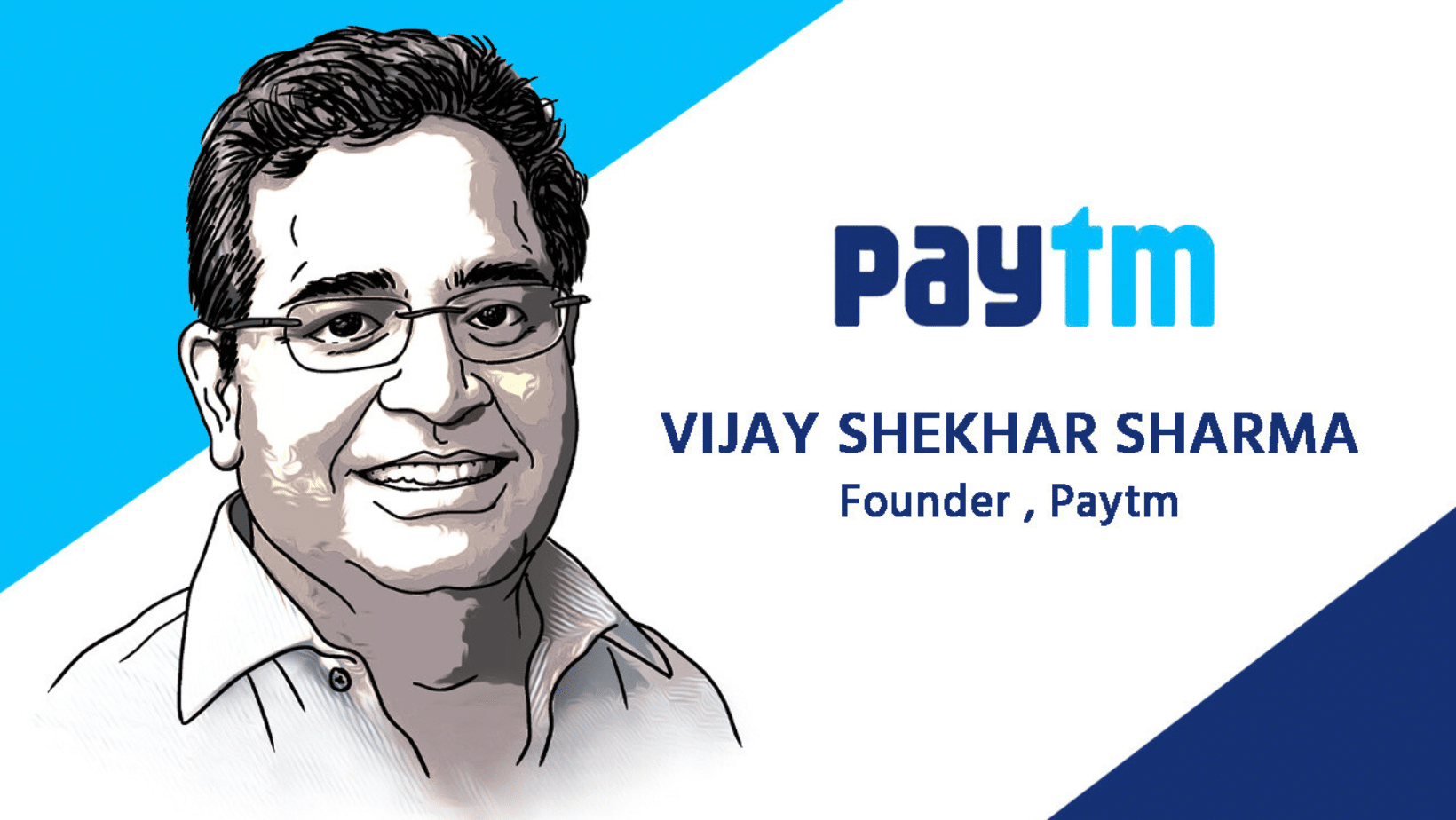
The Journey of Vijay Shekhar Sharma and the Rise of Paytm
Vijay Shekhar Sharma is the founder of Paytm, one of India’s largest digital payments platforms. Born in Aligarh, Sharma built Paytm from a small mobile recharge startup into a fintech giant used by hundreds of millions of Indians. The company gained massive growth during the 2016 Indian Demonetization, which accelerated digital payments across the country. Today Paytm offers services including UPI payments, banking, lending, insurance, and investments.
India’s startup ecosystem has produced many visionary entrepreneurs, but few stories are as remarkable as that of Vijay Shekhar Sharma.
From a small-town student who struggled with English to building a multi-billion-dollar fintech company, Sharma’s journey reflects determination, innovation, and resilience.
His company Paytm has transformed the way millions of Indians pay, transfer money, shop, and access financial services.
Early Life and Education
Vijay Shekhar Sharma was born in 1978 in Aligarh, a small city in the northern Indian state of Uttar Pradesh.
His father worked as a school teacher, and the family lived a modest middle-class life.
Sharma completed his schooling in Hindi medium, which later became a challenge when he entered engineering college.
At just 15 years old, he secured admission to Delhi College of Engineering, one of India’s top engineering institutions.
However, the language barrier made his early college years extremely difficult. Determined to succeed, Sharma began teaching himself English through newspapers, books, and movies.
This ability to adapt and overcome obstacles later became one of his greatest strengths as an entrepreneur.
The First Startup
During the late 1990s internet boom, Sharma launched his first company called XS Communications while still in college.
The company focused on online content and internet services during a time when the Indian internet industry was just beginning.
Within a few years, Sharma sold the company for around $1 million, giving him his first major financial success.
However, his next ventures did not perform as expected. Several projects failed, and Sharma faced serious financial difficulties.
But instead of giving up, he continued pursuing his dream of building a technology company that could impact millions of people.
The Birth of Paytm
In 2010, Sharma founded One97 Communications, which later launched the digital payments platform Paytm.
Initially, Paytm focused on mobile recharges and bill payments.
At the time, digital payments were still uncommon in India. Most people relied on cash for everyday transactions.
Sharma believed smartphones would change how people handle money, and he envisioned Paytm becoming a mobile-first financial ecosystem.
The name Paytm stands for “Pay Through Mobile.”
The Demonetization Boom
Paytm’s growth accelerated dramatically during the 2016 Indian Demonetization.
When the Indian government suddenly withdrew ₹500 and ₹1000 currency notes, millions of people faced a cash shortage.
This unexpected situation pushed businesses and consumers toward digital payments.
Paytm quickly became the most convenient option.
Within months:
- Millions of users joined the platform
- Small merchants adopted Paytm QR payments
- Digital wallet transactions surged nationwide
Paytm soon became a household name across India.
Building a Fintech Ecosystem
After dominating the mobile wallet market, Paytm expanded its services into a complete fintech ecosystem.
The company introduced:
Digital Payments
- UPI transfers
- QR code payments
- Mobile wallet services
Banking Services
Through Paytm Payments Bank, users gained access to digital banking solutions.
Financial Services
Paytm began offering:
- Insurance products
- Mutual funds
- Stock trading
- Personal loans
Digital Commerce
The platform also added services like:
- Travel booking
- Event tickets
- Online shopping
This diversification helped Paytm evolve from a simple wallet app into a full financial platform.
Global Investors and Funding
Paytm attracted significant investments from major global firms, including:
- SoftBank
- Alibaba Group
- Ant Group
- Berkshire Hathaway
These investments helped Paytm expand rapidly and compete with international fintech companies.
Paytm’s Historic IPO
In 2021, Paytm launched its public listing through the Paytm IPO.
The IPO raised approximately $2.5 billion, making it one of the largest IPOs in Indian history.
Although the stock market performance faced ups and downs, Paytm remains a major fintech player.
Regulatory Challenges
Fintech companies operate under strict financial regulations.
The Reserve Bank of India introduced several compliance rules for digital payment companies.
As a result, Paytm had to adjust parts of its banking operations and strengthen regulatory compliance.
Despite these challenges, the company continues to innovate and expand.
Leadership Vision of Vijay Shekhar Sharma
Sharma believes technology can bring financial services to millions who were previously excluded from the banking system.
His leadership focuses on:
- Innovation through technology
- Financial inclusion
- Long-term digital infrastructure
Under his leadership, Paytm helped drive India’s digital payments revolution.
Impact on India’s Digital Economy
Today Paytm plays a significant role in India’s financial ecosystem.
The platform enables:
- Street vendors to accept QR payments
- Small businesses to digitize transactions
- Consumers to manage money through smartphones
Millions of merchants across India now rely on Paytm for daily transactions.
The Future of Paytm
As India’s digital economy grows rapidly, Paytm aims to expand into new areas including:
- AI-powered fintech services
- Merchant lending platforms
- Advanced digital banking solutions
The company continues to innovate in order to remain competitive in India’s evolving fintech landscape.
FAQs: Vijay Shekhar Sharma and Paytm
Who is Vijay Shekhar Sharma?
Vijay Shekhar Sharma is an Indian entrepreneur and the founder of Paytm, one of India’s largest digital payments platforms. He is widely known for pioneering mobile payments and fintech innovation in India.
What is Paytm?
Paytm is a fintech platform that allows users to make digital payments, transfer money through UPI, pay bills, book travel tickets, invest in mutual funds, and access financial services. It is operated by One97 Communications.
When was Paytm founded?
Paytm was founded in 2010 by Vijay Shekhar Sharma under One97 Communications. It initially started as a platform for mobile recharges and bill payments.
Why did Paytm grow rapidly in India?
Paytm saw massive growth during the 2016 Indian Demonetization, when the Indian government removed high-value currency notes. This created a sudden demand for digital payment solutions, and Paytm quickly became a popular choice for both consumers and merchants.
Who invested in Paytm?
Paytm has received investments from several global companies including:
SoftBank
Alibaba Group
Ant Group
Berkshire Hathaway
These investments helped Paytm expand its fintech services across India.
What services does Paytm offer today?
Today Paytm provides a wide range of services including:
UPI payments and QR code payments
Mobile wallet transactions
Banking through Paytm Payments Bank
Insurance and loans
Mutual fund and stock investments
Travel and ticket booking
When did Paytm launch its IPO?
Paytm launched its public listing through the Paytm IPO in 2021, raising around $2.5 billion, making it one of the largest IPOs in India.
Conclusion
The story of Vijay Shekhar Sharma proves that determination and vision can transform challenges into extraordinary success.
From a small-town student in Aligarh to the founder of Paytm, Sharma built a company that revolutionized digital payments in India.
His journey continues to inspire a new generation of entrepreneurs who dream of building the next big technology company.