
In the modern geopolitical economy, semiconductors are no longer just components—they are instruments of national power. At the center of this transformation stands Zhao Jianhui, a Chinese-American professor turned industrialist whose rise to billionaire status marks a pivotal moment in the global chip race.
Through his company, Epiworld International, Zhao has quietly positioned himself at the most fundamental layer of semiconductor production: advanced wafer materials. His ascent reflects not only personal success, but a deeper structural shift in how nations compete for technological dominance.
From Academic Research to Industrial Power
Zhao Jianhui’s journey began in academia, where he specialized in advanced semiconductor materials—particularly silicon carbide (SiC) and gallium nitride (GaN), known as third-generation semiconductors.
Unlike traditional silicon, these materials enable:
- Higher energy efficiency
- Greater thermal stability
- Faster switching speeds
- Compact, high-performance systems
These properties make them essential for the next generation of technologies, including electric vehicles, renewable energy systems, AI infrastructure, and 5G networks.
“The next industrial revolution will be powered not just by code—but by materials.”
Recognizing the industrial potential of his research, Zhao transitioned from academia to entrepreneurship, founding Epiworld International—a company focused on producing high-quality epitaxial wafers that serve as the base for power semiconductors.
The Billion-Dollar Breakthrough
Epiworld’s successful listing on the Hong Kong Stock Exchange, raising approximately $209 million, propelled Zhao into the billionaire ranks. But beyond capital markets, the IPO signaled something far more significant:
Investor confidence in China’s semiconductor self-reliance strategy.
As global supply chains fragment under geopolitical pressure, companies like Epiworld are emerging as critical enablers of domestic innovation ecosystems—particularly those aligned with Huawei.
“Zhao Jianhui didn’t follow the spotlight. He built the foundation beneath it.”
Why Power Semiconductors Matter More Than Ever
While much of the global conversation has focused on advanced logic chips used in AI, power semiconductors are rapidly becoming equally critical.
They are the backbone of:
- Electric vehicles (EVs)
- Charging infrastructure
- Renewable energy grids
- Industrial automation systems
- Data centers
At the heart of these systems are SiC and GaN wafers, which dramatically improve energy efficiency and system performance.
Industry estimates suggest the silicon carbide market alone is growing at 20–30% annually, driven largely by electrification and the global transition to clean energy.
“Power semiconductors are no longer niche—they are infrastructure.”
The EV Revolution: Fueling SiC Demand
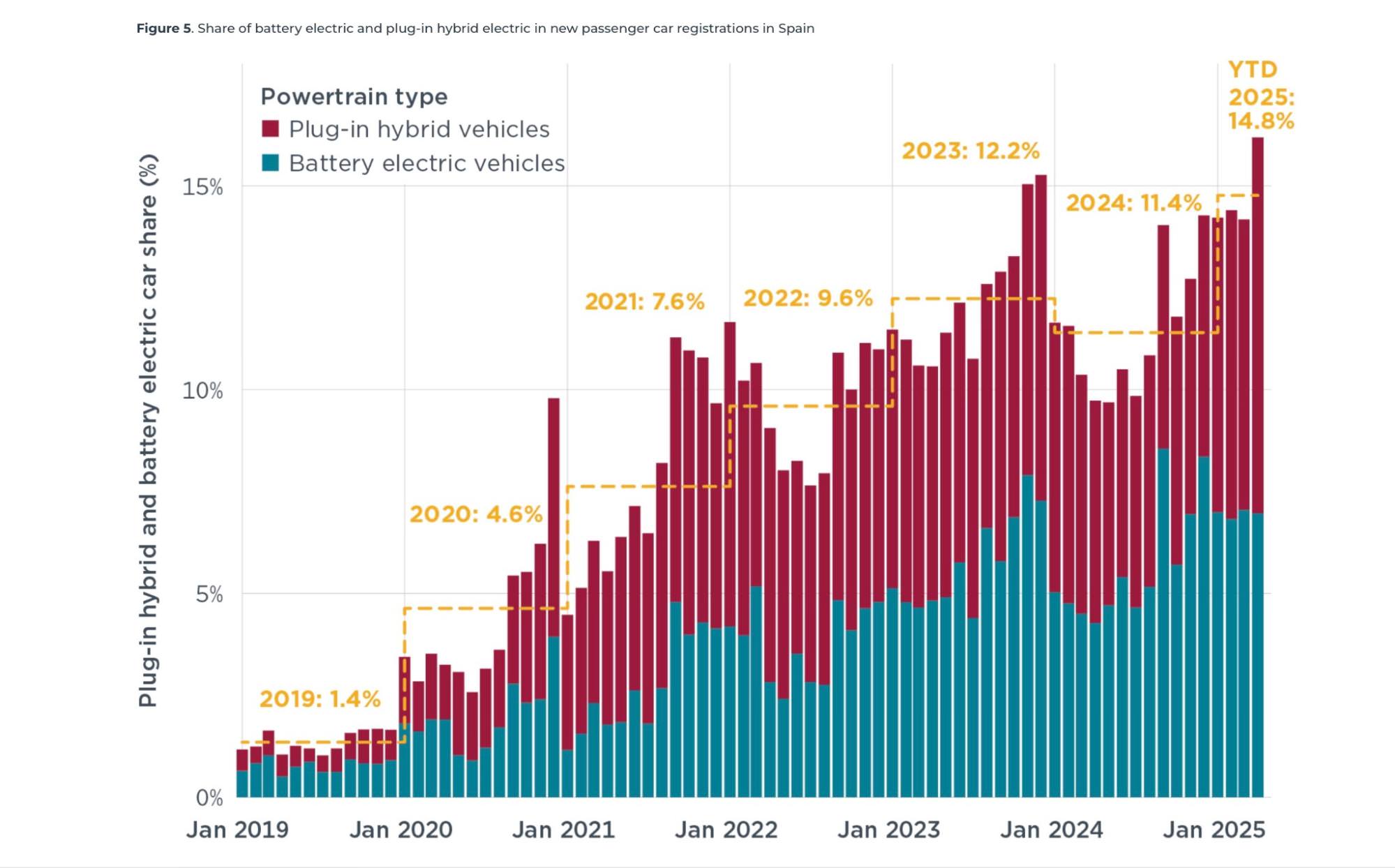
The explosive growth of electric vehicles is one of the primary drivers behind the demand for advanced power semiconductors.
Global EV sales trajectory:
- 2020: ~3 million units
- 2023: ~14 million units
- 2030 (projected): 40+ million units
Each EV requires highly efficient power conversion systems—making SiC wafers indispensable.
China, the world’s largest EV market, is accelerating this demand further, creating a powerful tailwind for companies like Epiworld.
Huawei’s Ecosystem: Engineering Resilience
The rise of Epiworld is closely tied to the strategic evolution of Huawei.
Faced with U.S. export restrictions, Huawei has systematically rebuilt its supply chain by investing in a domestic ecosystem spanning:
- Chip design
- Manufacturing
- Equipment
- Materials
Epiworld’s wafers play a crucial role in this ecosystem, particularly in power electronics used across telecom infrastructure, EVs, and AI systems.
“In the semiconductor race, the real power lies beneath the chip—in the wafer.”
Case Study: SMIC — Manufacturing Under Constraint
Semiconductor Manufacturing International Corporation (SMIC) is China’s leading chip foundry and a central pillar of its semiconductor strategy.
Key highlights:
- Annual revenue exceeding $8 billion
- Achieved 7nm-class chip production using DUV lithography
- Supplies domestic tech leaders, including Huawei
Despite lacking access to EUV lithography, SMIC has demonstrated that innovation under constraint is possible.
“Manufacturing resilience can substitute for technological supremacy—at least in the short term.”
Case Study: SiCarrier — Rebuilding the Toolchain
Founded in 2021, SiCarrier represents China’s push to localize semiconductor equipment.
Strategic focus:
- Developing alternatives to Western lithography systems
- Leveraging advanced patterning techniques (e.g., SAQP)
- Collaborating closely with Huawei’s R&D ecosystem
“Control the tools, and you control the future of chips.”
Epiworld’s Strategic Position: The Materials Advantage
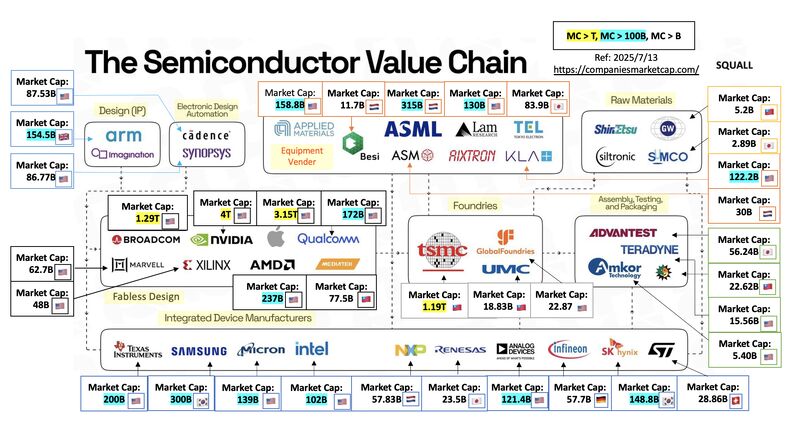
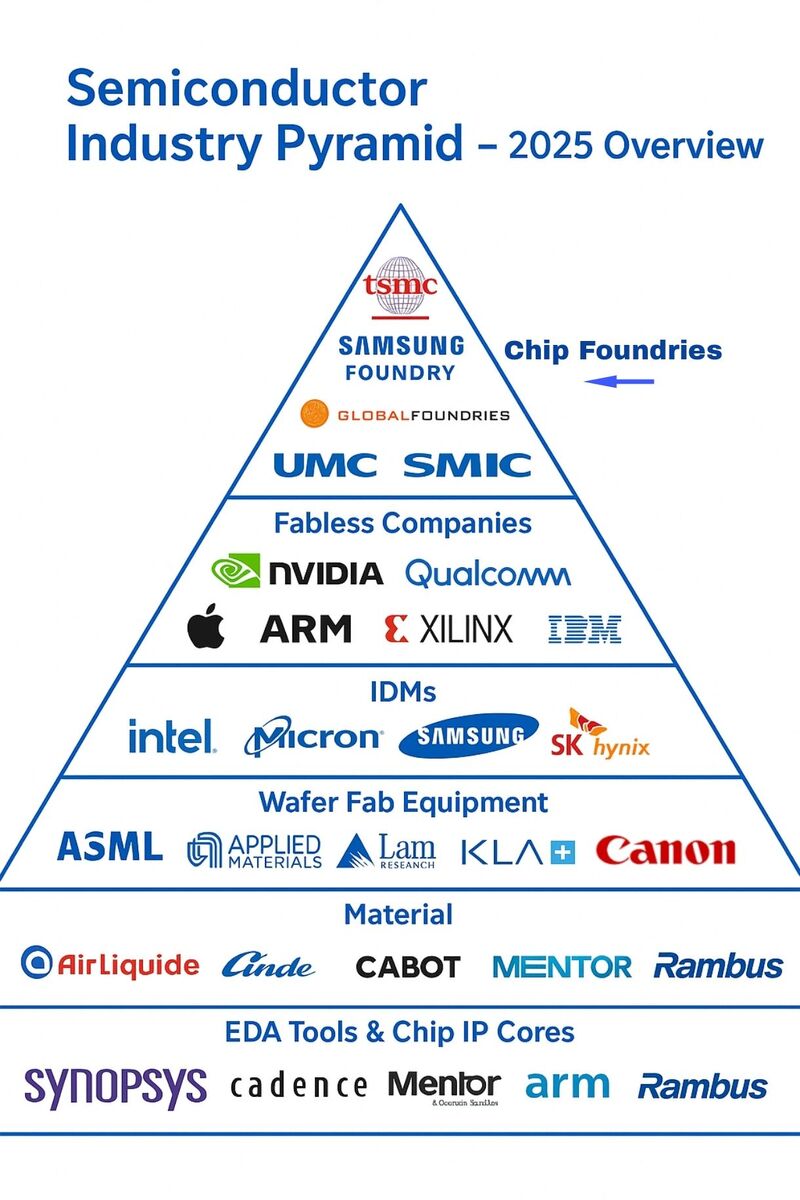
Within the semiconductor value chain, Epiworld operates at the materials layer—the starting point of all chip production.
Why this matters:
- No wafer → no chip
- High barriers to entry (scientific + capital intensive)
- Direct alignment with high-growth industries
This positioning gives Zhao Jianhui a unique strategic advantage: influence over the entire downstream ecosystem.
“Materials don’t just support innovation—they define its limits.”
Global Competition: A Fragmented but Fierce Landscape
China’s rise is unfolding against a backdrop of strong global incumbents:
United States
- Wolfspeed — Leader in SiC wafers
- ON Semiconductor — Power electronics specialist
Europe
- Infineon Technologies — Automotive semiconductor leader
- STMicroelectronics — Strong in power and industrial chips
Japan
- ROHM Semiconductor — Advanced SiC solutions
“The semiconductor battlefield is no longer globalized—it is strategically fragmented.”
These companies dominate today—but China’s integrated, state-backed approach is rapidly narrowing the gap.
The New Semiconductor Strategy: China’s Playbook
Zhao’s success reflects a broader national strategy built on four pillars:
1. Vertical Integration
Building a complete semiconductor ecosystem—from materials to manufacturing.
2. Talent Repatriation
Leveraging globally trained scientists to drive domestic innovation.
3. Capital Alignment
Deploying state-backed funds and public markets to accelerate growth.
4. Strategic Focus
Prioritizing high-impact segments like power semiconductors over bleeding-edge nodes.
“This is not imitation—it is system-level reinvention.”
Data Snapshot: The Scale of Transformation
- Epiworld IPO: ~$209 million raised
- SMIC revenue: $8B+ annually
- China semiconductor funding: $100B+ (multi-phase investment)
- EV market share (China): ~60% of global sales
- SiC market growth: 20–30% CAGR
Conclusion: Power Lies Beneath the Chip
The emergence of Zhao Jianhui as a billionaire is not an isolated story—it is a signal of a deeper transformation.
A transformation where:
- Power semiconductors become critical infrastructure
- Materials science becomes a strategic battleground
- National ecosystems replace globalized supply chains
“In the next decade, dominance will belong not just to those who design chips—but to those who control what they are built on.”
In the evolving hierarchy of technology:
- Designers create innovation
- Foundries enable production
- Materials define possibility
And in that foundational layer of the silicon economy, Zhao Jianhui has already secured his place.

