Home Blog Page 21

America’s Richest Self‑Made Women 2025: Leaders Who Built Empires

0
America’s Richest Self-Made Women 2025

???? The Founders Magazine 2025 Rankings & Key Metrics

  • The minimum net worth to make the list rose to $350 million, up from $250 m in 2015.
  • A record 38 women are billionaires in 2025, compared to just 18 in 2015.

???? Top 5 Profiles: Wealth, Ventures & How They Did It

1. Diane Hendricks – $22.3 B – ABC Supply (Building‑materials)

From dairy farm to boardroom dominance:
Born March 2, 1947 in Mondovi, WI, Hendricks started life on a farm and became a single mom at 17. She earned her real estate license by 21 and began rehabbing homes—until 1982 when she co-founded ABC Supply with her husband Ken. After Ken’s tragic death in 2007, Diane assumed leadership and steered the company through major acquisitions: Bradco in 2010 and L&W Supply in 2016. By 2024, ABC had over 900 branches and generated ~$20.7 B in sales.

Her business acumen scored a self‑made rating of 9/10 from Forbes. She also invests deeply in community revitalization, notably through A&E’s new show Betting on Beloit, where her daughter leads restoration projects in their hometown.


2. Judy Faulkner – $7.8 B – Epic Systems (Healthcare software)

Founded Epic Systems in her basement in 1979, without any VC backing. Faulkner led development in-house for decades; today, Epic software manages records for over 250 million patients and powers institutions like Mayo Clinic and Johns Hopkins. She holds ~47% of the company and pledged to donate 99% of her wealth through her foundation.


3. Thai Lee – $7.0 B – SHI International (IT services & software reseller)

A Harvard‑educated immigrant from Bangkok, Lee and her then‑husband acquired a small software reseller in 1989 with under $1 M. Over 30+ years, SHI grew into a $14 B enterprise serving clients like Boeing and AT&T. Lee has served as CEO for decades, steering SHI through explosive tech growth.


4. Marian Ilitch – $6.9 B – Little Caesars & Sports & Entertainment

Alongside her late husband, she founded Little Caesars in 1959. The brand now earns over $4.5 B annually. Beyond pizza, she owns the Detroit Red Wings, co-owns the Tigers via a family trust, and is building a $1.4 B Detroit sports‑entertainment district with pizza-themed architecture.


5. Lynda Resnick – $6.3 B – The Wonderful Company (Agriculture & Beverages)

Resnick started an ad agency before partnering with her husband Stewart. Together, they turned Central Valley almonds, citrus, and Wonderful Pomegranate into a $10.6 B business. Resnick has donated over $2 B to climate research and social causes.


???? Emerging Stars & Notable Ventures

???? Lucy Guo – $1.3 B – Scale AI & Passes

At 30, Guo is now the youngest self‑made female billionaire, surpassing Taylor Swift. She co-founded Scale AI in 2016, retained a ~5% stake in the company valued near $25 B, and later launched Passes, a creator platform akin to a family‑friendly OnlyFans. Passes raised ~$40 M by 2024 but faces a class‑action lawsuit over alleged underage content—allegations Guo’s team denies.

⭐ Entertainment Icons: Turner of Fame into Fortune

  • Kim Kardashian (~$1.7 B via Skims)
  • Taylor Swift (~$1.6 B from Eras Tour, catalog rights)
  • Rihanna (~$1 B through Fenty Beauty & Savage x Fenty)
    Also featured: Selena Gomez, Katy Perry, Kylie Jenner, Reese Witherspoon, Ellen DeGeneres and Barbra Streisand.

???? Other trailblazers & innovators

Women like Sheryl Sandberg ($2.3 B), Daniela Amodei ($1.2 B, Anthropic), Marissa Mayer (~$980 M AI startup Sunshine) reflect the Bay Area’s tech surge. Serena Williams, valued at $350 M, has transitioned into investing via her firm Serena Ventures. Agri‑innovators like Barbara Banke ($2.5 B) and diverse entrepreneurs such as Doris Fisher (Gap cofounder) also shape the list.

America’s Top 10 Richest Self‑Made Women (2025)

According to Forbes’ 2025 ranking, the net worth threshold to make the list rose to $350 million—and a record 38 of the 100 women are now billionaires.

Here’s who’s leading:

RankNameNet WorthIndustry / VentureBased in / HQ
1Diane Hendricks~$22.3 BABC Supply (building materials)Wisconsin
2Judy Love & family~$13.1 BLove’s Travel Stops & Country StoresOklahoma
3Judy Faulkner~$7.7‑7.8 BEpic Systems (healthcare software)Wisconsin
4Thai Lee~$7.0 BSHI International (IT services software reseller)Texas
5Marian Ilitch & family~$6.9 BLittle Caesars & Detroit sports/entertainmentMichigan
6Elizabeth Uihlein~$5.7 BUline (packaging & shipping supplies)Illinois
7Lynda Resnick~$6.3 BThe Wonderful Company (agribusiness & beverages)California
8Gail Miller~$4.6 BAuto dealerships, Jazz NBA franchise & real estateUtah
9Jayshree Ullal~$4.5 BArista Networks (networking hardware & software)California
10Johnelle Hunt~$3.9 BJB Hunt Transport Services (trucking logistics)Arkansas

???? Why Their Success Matters: Key Insights

  • Bootstrapped scale: Most built businesses from zero or tiny capital—like Epic, ABC Supply, Little Caesars, SHI—without VC or inheritance.
  • Strategic acquisitions: Smart expansions—such as ABC’s Bradco and L&W purchases—multiplied size and market share.
  • Consumer-first innovation: Thai Lee tapped enterprise IT, while Guo rode AI growth; Toni Ko (NYX Cosmetics) leveraged influencer marketing early on.
  • Diversified impact: These women aren’t just wealthy—they invest philanthropically, revive communities, and shift industries.

❓ FAQs: What You’re Curious About

Which woman topped the 2025 list?

Diane Hendricks leads with $22.3 billion, heading ABC Supply Co., a national building‑materials company with 900+ offices in the U.S.

Who is the youngest billionaire on the list?

Lucy Guo, aged 30, with $1.3 B primarily from her stake in AI leader Scale AI and entrepreneur platform Passes. She unseated Taylor Swift in this year’s rankings.

How much wealth is on the table?

The combined net worth of the 100 women on Forbes’ list is estimated at $155 billion—across tech, entertainment, agriculture, beauty, and logistics.

What industries dominate?

Top sectors include healthcare software (Epic), IT services (SHI), retail and packaging (Uline), agriculture (Wonderful), entertainment & beauty (Skims, Fenty), and tech startups (Scale AI, Anthropic).

???? Final Thought

The 2025 list is more than a financial leaderboard—it’s a testament to resilience, strategic growth, innovation, and storytelling. From Diane Hendricks’ small‑town rise to Lucy Guo’s AI revolution, these women redefine wealth-building in America’s modern economy. They’ve built real businesses—and legacies.

Keep Reading:

Why Is Netflix Removing Christian Movies? The Truth Explained

0
Why Is Netflix Removing Christian Movies

Netflix users have raised eyebrows over the quiet disappearance of several Christian movies from the platform. Is Netflix targeting religious content, or is this just a business-as-usual move? Why Is Netflix Removing Christian Movies?

Let’s break it down with real data, examples, and alternatives—plus tackle the myths.


???? 1. Licensing Agreements: The Real Reason Titles Vanish

Most Christian movies on Netflix—like God’s Not Dead, The Case for Christ, or Heaven is for Real—are not owned by Netflix. These are third-party films licensed for a limited period, often 12–24 months.

Once that agreement expires, Netflix can:

  • Renew the license (if viewership justifies the cost)
  • Or let it expire and remove the content

???? Example: The Case for Christ was added to Netflix in 2019, removed in 2021, briefly returned, and then disappeared again—following license expirations.


???? 2. Viewership Data: Netflix Favors High Engagement Content

Netflix tracks:

  • How many people watch a movie
  • How much of it they finish
  • How it performs globally

Unfortunately, most Christian movies see lower completion rates and niche audience reach, making them less valuable for renewal.

???? Netflix’s 2023 Transparency Report showed its top-performing films were mostly action, thriller, and mainstream dramas—faith-based films didn’t make the list.


???? 3. Netflix’s Global Strategy: Broader, Bolder, and Original

Netflix has shifted its focus to globally scalable Originals like:

  • The Crown (UK)
  • Lupin (France)
  • Money Heist (Spain)

Faith-based films, mostly US-centric, are often cut to make room for more universally appealing content.

???? Netflix spent over $17 billion in 2024 on original content, shrinking the budget for licensed niche films.


???? 4. Content Rotation: It’s Not Just Christian Films

Netflix regularly removes:

  • Horror movies during off-seasons
  • Indie foreign films with low rewatchability
  • Documentaries with expired distribution rights

Recent Removals (June 2025):

  • VeggieTales in the House (Christian kids’ series)
  • Left Behind
  • Son of God
  • War Room

But also removed at the same time:

  • The Revenant
  • Knives Out
  • Jumanji: Welcome to the Jungle

???? Point: It’s a content cycle, not a faith-targeted strategy.


⚔️ 5. Conspiracy Theories: Debunking the Anti-Christian Rumor

A viral 2016 satire article falsely claimed “Netflix to purge all Christian content by Christmas.” Despite being satire, it sparked waves of concern—prompting Netflix to issue a statement:

“We categorically deny any intention to remove all Christian content. We license and rotate based on performance and availability.”

In reality, faith-based content continues to appear, just less frequently due to demand dynamics.


???? Still on Netflix (As of July 2025): Faith-Driven Titles

Here are some Christian or faith-positive movies and shows still available:

  • The Chosen (Season 1 licensed in select regions)
  • A Week Away (Christian musical)
  • The Young Messiah
  • Testament: The Story of Moses (Netflix Original)
  • Forgiven (Faith-themed crime drama)

???? Best Alternatives to Netflix for Christian Movies

1. Pure Flix
➡️ A dedicated Christian streaming platform with over 5,000 faith-based films and series
Notable Titles: God’s Not Dead, Do You Believe?, The Encounter

2. UP Faith & Family
➡️ Offers uplifting movies and family-friendly content
Notable Titles: Bringing Up Bates, Heartland (faith-adjacent)

3. Great American Pure Flix (GAC Media collab)
➡️ A premium alternative emphasizing “faith, family, and country” themes

4. Angel Studios
➡️ Free streaming of The Chosen, His Only Son, and more


❓FAQs: Netflix & Christian Movie Removals

???? Is Netflix removing Christian content on purpose?

No. Netflix removes content based on licensing and viewership data. There’s no evidence of ideological targeting.

???? Can I request more Christian movies on Netflix?

Yes, you can use Netflix’s content suggestion form to recommend films you want added.

Where can I buy or rent faith-based movies?

Try:
Amazon Prime Video
Apple TV
ChristianCinema.com
YouTube Movies

???? Why do some Christian shows suddenly reappear?

Sometimes titles like Heaven is for Real or Fireproof are relicensed after viewer demand surges—or during seasonal spikes like Easter or Christmas.


???? Final Thoughts

Netflix removing Christian movies isn’t about censorship—it’s a mix of business economics, low global demand, and strategic content rotation. Faith-based content still exists on the platform but is outshined by bigger-budget originals and global hits.

If you’re a fan of Christian storytelling, the best approach is to:

  • Support dedicated Christian platforms
  • Buy/rent your favorite titles
  • Voice your content requests directly to Netflix

Keep Reading:

How Victoria’s Secret’s Les Wexner Made $2 Billion In 3 Months From AI Giant CoreWeave

0
Les Wexner
Les Wexner

In a stunning display of tech-era wealth acceleration, Les Wexner, the enigmatic billionaire behind Victoria’s Secret and L Brands, has turned heads by pocketing $2 billion in just three months — not from fashion, but from CoreWeave, an AI infrastructure startup that has rapidly become a darling of the artificial intelligence boom.

Wexner’s early backing of CoreWeave underscores a dramatic shift among old-guard moguls who are now riding the wave of generative AI profits. This article uncovers how Wexner built his stake, what CoreWeave does, and why this might just be the start of a bigger AI-era investment play.


Who Is Les Wexner?

Leslie H. Wexner, 87, is the founder and former CEO of L Brands, the conglomerate behind brands like Victoria’s Secret, Bath & Body Works, and Abercrombie & Fitch. He built a retail empire that transformed the lingerie and beauty space. Forbes estimates his net worth as of July 2025 to be around $6.5 billion, with a large chunk now tied to private investments.

Key Career Highlights:

  • Founded The Limited in 1963.
  • Built L Brands, taking Victoria’s Secret global.
  • Retired as CEO in 2020 amid brand criticism and Epstein-related scrutiny.
  • Now runs private family office via Wexner Foundation and investment arms.

What Is CoreWeave?

CoreWeave is a cloud infrastructure company specializing in AI-focused GPU computing. Originally a crypto mining outfit, CoreWeave pivoted to AI infrastructure and now leases NVIDIA’s high-end chips (like H100 and A100 GPUs) to AI model developers and enterprises needing raw processing power.

CoreWeave Snapshot:

  • Founded: 2017 by Brian Venturo, Max Hellerstein, and Michael Intrator
  • HQ: Roseland, New Jersey
  • Focus: GPU-based cloud computing for AI/ML
  • Valuation (as of July 2025): $19 billion
  • Backers: Blackstone, NVIDIA, Fidelity, Magnetar Capital
  • Customers: OpenAI, Anthropic, and other LLM developers

CoreWeave’s business has surged in the generative AI gold rush, providing on-demand GPU power that rivals and even undercuts the likes of AWS, Google Cloud, and Azure.


Les Wexner’s Stake in CoreWeave: The $2 Billion Windfall

Wexner’s $2 billion windfall traces back to his early stake through an investment vehicle linked to his family office, reportedly buying in before the 2024 funding explosion.

Timeline of Profits:

  • 2023: Wexner quietly invests in CoreWeave’s earlier rounds.
  • May 2024: CoreWeave raises $1.1 billion in Series C at a $19 billion valuation, led by Blackstone, with contributions from Fidelity and NVIDIA.
  • Q2 2025: CoreWeave files for an IPO, and private shares surge in secondary markets.
  • July 2025: Valuation climbs; Wexner’s early stake appreciates nearly 1,200% in under 18 months.

According to Bloomberg, Wexner’s holdings — originally valued in the hundreds of millions — are now worth more than $2 billion, on paper, in just 90 days due to secondary sales and markups.


Why CoreWeave Is So Valuable

CoreWeave’s value lies in its ability to deliver low-latency, scalable access to GPUs, especially NVIDIA’s H100s, which are in short supply. Its AI-first cloud model has helped:

  • Startups like OpenAI access affordable compute
  • Enterprise AI teams avoid building costly infrastructure
  • Edge innovators experiment faster with LLMs and diffusion models

The global AI infrastructure market is expected to surpass $100 billion by 2027, with CoreWeave poised to capture a large share.


Wexner’s Strategy: From Retail Tycoon to AI Power Broker

Wexner’s pivot into tech isn’t accidental. With decades of capital markets experience and connections, he’s used private investment channels, hedge funds, and VC partnerships to deploy capital outside of traditional retail.

Key Investment Traits:

  • Long-term horizon
  • High-risk/high-reward tolerance
  • Access to exclusive deals via elite networks
  • Smart alignment with emerging tech (AI, cloud)

While Wexner has largely stayed out of the limelight post-retirement, this strategic move into CoreWeave shows he still has the Midas touch — and an eye for transformational industries.


What’s Next for CoreWeave and Wexner?

CoreWeave:

  • IPO anticipated by late 2025, with potential listing on NASDAQ
  • Likely to cross $1.5 billion in annual revenue by 2026
  • Expanding data centers and global presence to meet demand

Wexner:

  • May become one of the top private tech investors of the decade
  • Could reinvest profits into new AI, biotech, or quantum startups
  • Legacy now includes not just retail transformation but tech foresight

FAQs

How did Les Wexner invest in CoreWeave?

Wexner reportedly invested through a private equity or venture fund tied to his family office before CoreWeave’s Series C and valuation spike.

Is CoreWeave publicly traded?

No, but an IPO is expected by the end of 2025.

What does CoreWeave do differently from AWS or Google Cloud?

CoreWeave offers GPU-optimized cloud computing, specifically tailored for AI/ML workloads, at better availability and often lower cost.

Why is this investment significant?

It highlights the cross-industry appeal and profitability of AI, showing that even legacy business titans can earn billions by strategically entering the tech sector.

Conclusion

Les Wexner’s $2 billion gain in just 3 months is a masterclass in strategic investing — identifying a market with explosive potential, backing the right horse (CoreWeave), and knowing when to capitalize. The former retail magnate has now cemented himself as a serious player in the AI gold rush, and his story signals just how fast wealth can be created in the AI-first economy.

Keep Reading:

Founder vs CEO: What’s the Difference and Why It Matters

0

In the dynamic world of startups and business leadership, the terms Founder and CEO are often used interchangeably. However, these two roles carry distinct responsibilities, implications, and significance. Understanding the difference between a Founder and a CEO is essential not only for aspiring entrepreneurs but also for investors, employees, and stakeholders.

This article dives deep into what each role entails, how they intersect, and when a founder should (or shouldn’t) become the CEO.


Who is a Founder?

A Founder is the person (or people) who starts a company from scratch. They are the visionary who comes up with the idea, takes the initial risk, and lays the foundation for the business.

Key Responsibilities of a Founder:

  • Developing the original idea or concept.
  • Building the initial product or service.
  • Securing early funding (bootstrapping or seed investment).
  • Hiring the first team members.
  • Shaping company culture and values.

Traits of Successful Founders:

  • Visionary thinking
  • Risk-taking mindset
  • Creativity and passion
  • Persistence in the face of failure

Famous Founders: Steve Jobs (Apple), Elon Musk (Tesla, SpaceX), Larry Page & Sergey Brin (Google)


Who is a CEO?

The CEO (Chief Executive Officer) is the highest-ranking executive in a company. While the founder starts the business, the CEO is responsible for running it — setting the strategy, making major corporate decisions, managing overall operations, and ensuring profitability.

Key Responsibilities of a CEO:

  • Setting company vision and strategic direction
  • Managing executive leadership and teams
  • Representing the company to stakeholders, media, and investors
  • Driving growth and scalability
  • Reporting to the board of directors

Traits of a Strong CEO:

  • Strong leadership and decision-making
  • Operational and strategic expertise
  • Ability to scale the business
  • Excellent communication skills

Notable CEOs: Tim Cook (Apple), Sundar Pichai (Google), Satya Nadella (Microsoft)


Founder vs CEO: A Side-by-Side Comparison

AspectFounderCEO
RoleInitiates and establishes the companyRuns and scales the company
TimingAt the inceptionAppointed later or from the beginning
FocusVision, product, early growthStrategy, execution, scaling
AccountabilityTo self or co-foundersTo board of directors and shareholders
Position DurationCan be temporary or lifelongCan change with company needs

Can a Founder Also Be the CEO?

Absolutely. In fact, most startups begin with the founder also serving as CEO. However, as the company grows, the skillsets required to lead the organization at scale often change. Not all founders are equipped or interested in being a CEO long-term.

Examples:

  • Mark Zuckerberg (Founder & CEO of Meta) grew with the company.
  • Larry Page (Founder of Google) stepped down from CEO duties, handing over to Sundar Pichai.
  • Jack Dorsey (Founder of Twitter) resigned twice as CEO due to changing company needs.

When Should a Founder Step Down as CEO?

  • The company enters a phase that requires operational expertise beyond the founder’s strengths.
  • Investors or the board recommend experienced leadership for growth.
  • The founder wants to focus on product, innovation, or a new venture.

Pro Tip: Recognizing when to delegate leadership is a sign of maturity, not weakness.


Conclusion

While the Founder creates the spark, the CEO keeps the flame burning. The transition between these roles can be smooth or complex, but understanding the distinction is crucial for long-term success. Whether you’re an aspiring entrepreneur or scaling a startup, knowing the differences between these roles can guide your leadership journey.


FAQs

Can a company have multiple founders?

Yes, many startups are co-founded by multiple individuals who contribute complementary skills.

Does the founder always own the company?

Founders typically hold equity, but ownership can dilute over funding rounds.

Can a CEO replace a founder?

Yes. In many cases, the board can appoint a CEO to replace or succeed the founder in executive leadership.

What’s the difference between a co-founder and a founder?

A co-founder is one of several people who jointly start a company, while a founder can be solo.

Who is higher: Founder or CEO?

In terms of hierarchy, the CEO holds executive power. However, the founder often holds significant equity and influence.

Top 50 Richest Chinese Billionaires in 2025

1
Top 50 Richest Chinese Billionaires in 2025

China continues to be a global powerhouse for economic growth, innovation, and entrepreneurship. In 2025, Chinese billionaires have made significant strides in various sectors such as technology, electric vehicles, manufacturing, pharmaceuticals, real estate, and renewable energy. This article showcases the Top 50 Richest Chinese Billionaires in 2025, along with their estimated net worth, companies, industries, and short biographies.

Top 50 Richest Chinese Billionaires (2025)

RankNameNet Worth (USD)Company/Source of WealthIndustry
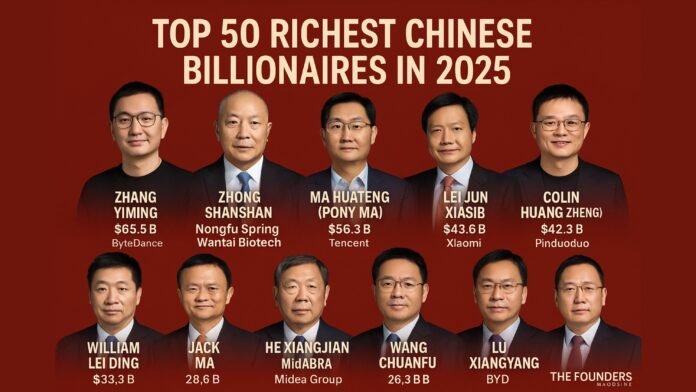
1Zhang Yiming$65.52 BByteDance (TikTok, Douyin)Social Media & Technology
2Zhong Shanshan$57.69 BNongfu Spring, Wantai BiotechBeverages & Pharmaceuticals
3Ma Huateng (Pony Ma)$56.25 BTencent (WeChat, QQ)Technology & Gaming
4Lei Jun$43.58 BXiaomiConsumer Electronics
5Colin Huang (Huang Zheng)$42.26 BPinduoduo (PDD Holdings)E-commerce
6William Ding (Ding Lei)$33.26 BNetEaseOnline Gaming & Internet Services
7Jack Ma$28.57 BAlibaba GroupE-commerce & Fintech
8He Xiangjian & Family$26.97 BMidea GroupHome Appliances
9Wang Chuanfu$26.34 BBYDElectric Vehicles & Batteries
10Lu Xiangyang$19.97 BBYDElectric Vehicles & Batteries
11Eric Li (Li Ping)$18.60 BCATLBattery Manufacturing
12Huang Shilin$17.42 BCATLBattery Manufacturing
13Zhang Zhidong (Tony Zhang)$16.90 BTencentTechnology & Gaming
14Wang Wei$16.18 BSF ExpressLogistics
15Wang Xing$14.61 BMeituanE-commerce & Services
16Qin Yinglin$14.60 BMuyuan FoodstuffAgriculture
17Dang Yanbao$14.48 BNingxia Baofeng Energy GroupEnergy
18Chen Tianshi$12.44 BCambricon TechnologiesAI & Semiconductors
19Wang Liping & Family$12.24 BTongwei Co., Ltd.Agriculture & Energy
20Qi Shi & Family$12.24 BEast Money Information Co.Financial Services
21Ge Li$11.00 BWuXi AppTecPharmaceuticals
22Li Shufu$10.50 BGeely AutomobileAutomotive
23Liu Yonghao$9.80 BNew Hope GroupAgriculture
24Xu Hang$9.50 BMindray MedicalMedical Devices
25Li Xiting$9.20 BMindray MedicalMedical Devices
26Wang Wenyin$9.00 BAmer International GroupMetals & Mining
27Zhou Qunfei$8.50 BLens TechnologyElectronics Manufacturing
28Zhang Fan$8.20 BCATLBattery Manufacturing
29Liu Qiangdong$8.00 BJD.comE-commerce
30Sun Piaoyang$7.80 BJiangsu Hengrui MedicinePharmaceuticals
31Wu Yajun$7.50 BLongfor PropertiesReal Estate
32Chen Bang$7.20 BAier Eye Hospital GroupHealthcare
33Li Jun$7.00 BDali Foods GroupFood & Beverage
34Zhang Lei$6.80 BHillhouse CapitalInvestment
35Wang Jianlin$6.50 BDalian Wanda GroupReal Estate & Entertainment
36Pan Zhengmin$6.20 BAAC TechnologiesElectronics Manufacturing
37Huang Guangyu$6.00 BGOME Electrical AppliancesRetail
38Li Hua$5.80 BSF ExpressLogistics
39Zhang Jindong$5.60 BSuning Holdings GroupRetail
40Yang Huiyan$5.40 BCountry Garden HoldingsReal Estate
41Zhang Shiping$5.20 BChina Hongqiao GroupAluminum Manufacturing
42Liu Yonghao$5.00 BNew Hope GroupAgriculture
43Xu Jiayin$4.80 BEvergrande GroupReal Estate
44Wang Zhongjun$4.60 BHuayi Brothers MediaEntertainment
45Wang Zhonglei$4.40 BHuayi Brothers MediaEntertainment
46Zhou Hongyi$4.20 BQihoo 360Cybersecurity
47Zhang Yuzhuo$4.00 BChina Energy Investment Corp.Energy
48Li Li$3.80 BHualan Biological EngineeringPharmaceuticals
49Wang Xiaochuan$3.60 BSogouTechnology
50Chen Tianqiao$3.50 BShanda GroupInvestment

Key Trends Among China’s Richest (2025)

  • Tech Titans Lead the Pack: Billionaires from the technology sector dominate the top rankings, reflecting China’s strategic investments in innovation, AI, and digital platforms.
  • EV and Green Energy Boom: Entrepreneurs from CATL and BYD exemplify China’s global leadership in electric vehicles and battery technology.
  • Resilience in E-commerce: Platforms like Pinduoduo, Meituan, and JD.com remain pivotal to China’s booming online retail economy.
  • Health & Pharma on the Rise: Companies like WuXi AppTec and Mindray Medical highlight China’s growing influence in global healthcare.

FAQs: China’s Billionaires 2025

Who is the richest person in China in 2025?

Zhang Yiming, founder of ByteDance, is the richest Chinese billionaire in 2025 with an estimated net worth of $65.52 billion.

Which industries are creating the most billionaires in China?

Technology, electric vehicles, battery manufacturing, pharmaceuticals, and e-commerce are the top wealth-generating industries in 2025.

Are Chinese billionaires impacted by government regulations?

Yes, government policies and regulations—especially in sectors like tech, real estate, and fintech—can influence billionaire rankings due to stock market fluctuations and company valuations.

Which city has the most Chinese billionaires?

Beijing remains the leading city, home to many top business tycoons, followed closely by Shenzhen and Shanghai.

Are there any self-made women on the list?

Yes, Zhou Qunfei and Wu Yajun are among the prominent self-made women billionaires in China.


Conclusion

China’s billionaire landscape in 2025 showcases a nation deeply invested in technological advancement, green energy, and global commerce. With entrepreneurs at the forefront of disruptive innovation, China continues to shape the future of global wealth and influence.

Stay tuned for real-time updates on China’s wealthiest individuals as markets evolve.


Keep Reading:

Top 20 Richest CEOs in the World (2025)

0
richest ceos 2025
Richest ceos 2025

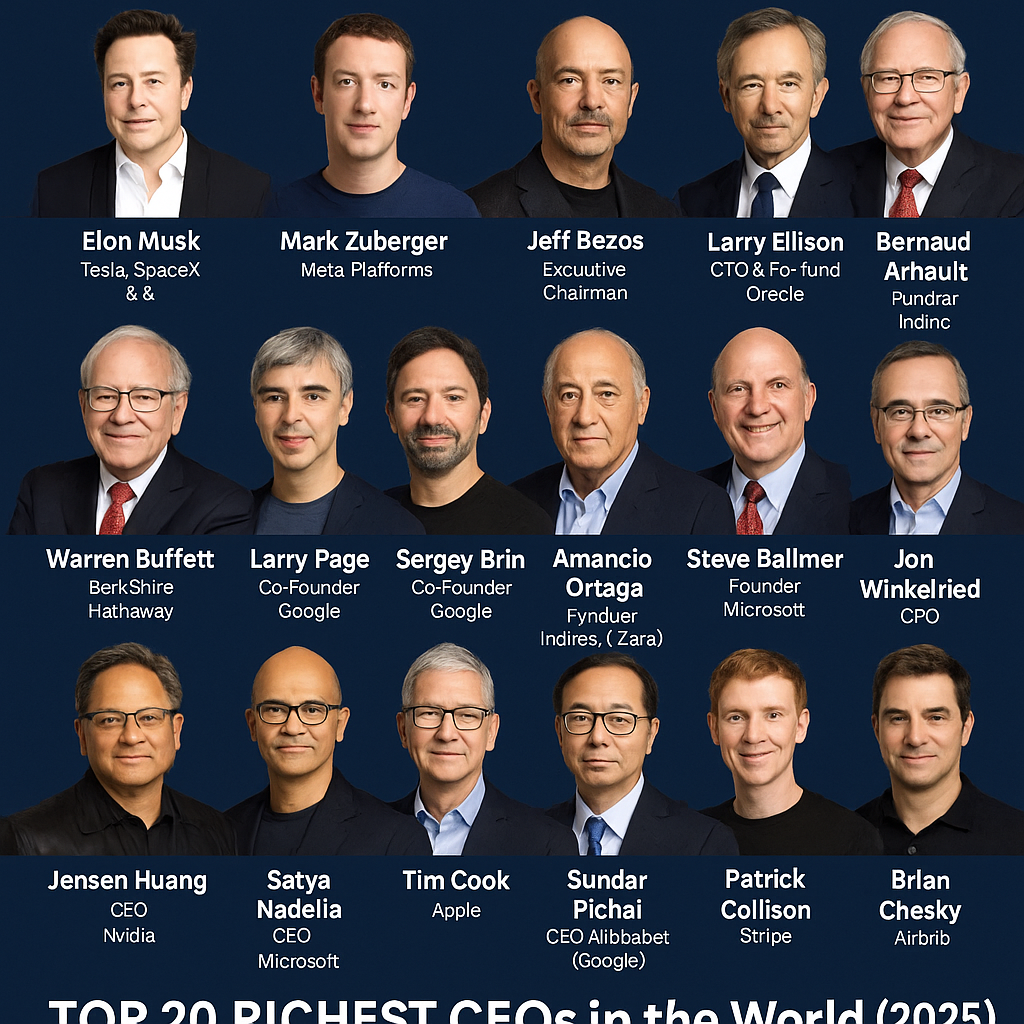
Top 20 Richest CEOs in the World (2025) – Net Worth, Companies & Profiles:

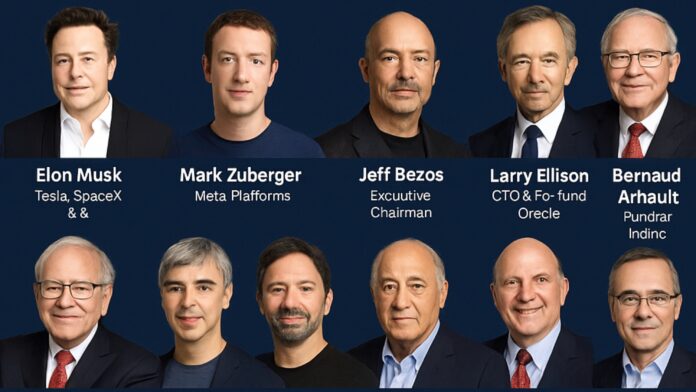
1. Elon Musk – CEO of Tesla, SpaceX, and X (formerly Twitter)

  • Net Worth: $433.9 billion
  • Biography: Elon Musk is a South African-born American entrepreneur and business magnate. He is the founder, CEO, and chief engineer of SpaceX; CEO and product architect of Tesla, Inc.; and owner and CEO of X Corp.
  • Company: Tesla, SpaceX, X (formerly Twitter)
  • History: Musk co-founded PayPal and Zip2, and has been instrumental in advancing electric vehicles, space exploration, and AI technologies.

2. Mark Zuckerberg – CEO of Meta Platforms

  • Net Worth: $225 billion
  • Biography: Mark Zuckerberg is an American computer programmer and Internet entrepreneur. He co-founded Facebook, Inc. and serves as its chairman, CEO, and controlling shareholder.
  • Company: Meta Platforms
  • History: Zuckerberg launched Facebook from his Harvard dormitory in 2004, which has since evolved into Meta Platforms, encompassing various social media and virtual reality products.

3. Jeff Bezos – Executive Chairman of Amazon

  • Net Worth: $220.9 billion
  • Biography: Jeff Bezos is an American entrepreneur, media proprietor, and investor. He is the founder and executive chairman of Amazon.com, Inc.
  • Company: Amazon
  • History: Bezos founded Amazon in 1994 as an online bookstore, which has grown into the world’s largest online retailer and a prominent cloud services provider.

4. Larry Ellison – CTO and Co-Founder of Oracle

  • Net Worth: $192 billion
  • Biography: Larry Ellison is an American business magnate and investor. He co-founded Oracle Corporation and served as its CEO until 2014.
  • Company: Oracle Corporation
  • History: Ellison co-founded Oracle in 1977, which became a leading enterprise software company specializing in database management systems.

5. Bernard Arnault – CEO of LVMH

  • Net Worth: $178 billion
  • Biography: Bernard Arnault is a French business magnate and art collector. He is the chairman and CEO of LVMH Moët Hennessy Louis Vuitton, the world’s largest luxury goods company.
  • Company: LVMH
  • History: Arnault transformed LVMH into a global luxury conglomerate, overseeing brands like Louis Vuitton, Dior, and Moët & Chandon.

6. Warren Buffett – CEO of Berkshire Hathaway

  • Net Worth: $158.5 billion
  • Biography: Warren Buffett is an American business magnate, investor, and philanthropist. He is the chairman and CEO of Berkshire Hathaway.
  • Company: Berkshire Hathaway
  • History: Buffett is known for his value investing philosophy and has led Berkshire Hathaway to acquire numerous companies across various industries.

7. Larry Page – Co-Founder of Google

  • Net Worth: $151 billion
  • Biography: Larry Page is an American computer scientist and Internet entrepreneur. He co-founded Google and served as CEO of its parent company, Alphabet Inc.
  • Company: Alphabet Inc.
  • History: Page co-created the PageRank algorithm, which became the foundation of Google’s search engine, revolutionizing the way information is accessed online.

8. Sergey Brin – Co-Founder of Google

  • Net Worth: $142 billion
  • Biography: Sergey Brin is an American computer scientist and Internet entrepreneur. He co-founded Google and served as president of Alphabet Inc.
  • Company: Alphabet Inc.
  • History: Brin played a key role in developing Google’s search engine and has been involved in various innovative projects within Alphabet.

9. Amancio Ortega – Founder of Inditex (Zara)

  • Net Worth: $124 billion
  • Biography: Amancio Ortega is a Spanish billionaire businessman and the founder of Inditex fashion group, best known for its chain of Zara clothing and accessories shops.
  • Company: Inditex
  • History: Ortega revolutionized fashion retail with his fast-fashion model, making Zara a global brand.

10. Steve Ballmer – Former CEO of Microsoft

  • Net Worth: $118 billion
  • Biography: Steve Ballmer is an American businessman and investor. He served as the CEO of Microsoft from 2000 to 2014.
  • Company: Microsoft
  • History: Ballmer joined Microsoft in 1980 and played a significant role in its growth, later purchasing the Los Angeles Clippers basketball team.

11. Jensen Huang – CEO of Nvidia

  • Net Worth: $117.5 billion
  • Biography: Jensen Huang is a Taiwanese-American entrepreneur and the co-founder, president, and CEO of Nvidia Corporation.
  • Company: Nvidia Corporation
  • History: Huang co-founded Nvidia in 1993, leading it to become a leader in graphics processing units (GPUs) and AI technology.

12. Satya Nadella – CEO of Microsoft

  • Net Worth: $1.1 billion
  • Biography: Satya Nadella is an Indian-American business executive. He became the CEO of Microsoft in 2014.
  • Company: Microsoft
  • History: Nadella has focused on cloud computing and AI, steering Microsoft towards significant growth and innovation.

13. Tim Cook – CEO of Apple

  • Net Worth: $2.4 billion
  • Biography: Tim Cook is an American business executive. He succeeded Steve Jobs as the CEO of Apple Inc. in 2011.
  • Company: Apple Inc.
  • History: Under Cook’s leadership, Apple has expanded its product line and services, becoming the world’s most valuable company.

14. Sundar Pichai – CEO of Alphabet (Google)

  • Net Worth: $1.3 billion
  • Biography: Sundar Pichai is an Indian-American business executive. He became the CEO of Google in 2015 and of Alphabet Inc. in 2019.
  • Company: Alphabet Inc.
  • History: Pichai has overseen the development of key products like Chrome and Android, and has led Google’s expansion into AI and cloud computing.

15. Jon Winkelried – CEO of TPG

  • Net Worth: $1.9 billion
  • Biography: Jon Winkelried is an American businessman and the CEO of TPG, a global private equity firm.
  • Company: TPG
  • History: Winkelried joined TPG in 2015 and has led the firm through significant growth and strategic investments.

16. Amin H. Nasser – CEO of Saudi Aramco

  • Net Worth: $23 billion
  • Biography: Amin H. Nasser is a Saudi engineer and businessman. He has been the CEO of Saudi Aramco since 2015.
  • Company: Saudi Aramco
  • History: Nasser has overseen Aramco’s IPO and its expansion into new energy sectors.

17. Reed Hastings – Co-CEO of Netflix

  • Net Worth: $1.5 billion
  • Biography: Reed Hastings is an American businessman and co-founder of Netflix.
  • Company: Netflix
  • History: Hastings transformed Netflix from a DVD rental service into a leading streaming platform.

18. Daniel Zhang – CEO of Alibaba Group

  • Net Worth: $1.2 billion
  • Biography: Daniel Zhang is a Chinese business executive. He became the CEO of Alibaba Group in 2015.
  • Company: Alibaba Group
  • History: Zhang has led Alibaba’s expansion into cloud computing and international markets.

19. Patrick Collison – CEO of Stripe

  • Net Worth: $1.1 billion
  • Biography: Patrick Collison is an Irish entrepreneur and programmer. He co-founded Stripe with his brother John Collison in 2010.
  • Company: Stripe
  • History: Stripe is a financial infrastructure platform for businesses. Under Collison’s leadership, it has become a global leader in online payments, valued at over $50 billion as of 2025.

20. Gautam Adani – Chairman of Adani Group

  • Net Worth: $82.5 billion
  • Biography: Gautam Adani is an Indian industrialist and the founder of the Adani Group, a conglomerate with interests in ports, energy, and infrastructure.
  • Company: Adani Group
  • History: Adani built his empire from a small commodity trading business into one of India’s largest business groups, playing a significant role in India’s economic development.
richest ceos 2025
Richest ceos 2025

???? Bonus Mentions
Shiv Nadar – Founder of HCL Technologies – $31.8 billion
Zhang Yiming – Founder of ByteDance (TikTok) – $41.4 billion
Francoise Bettencourt Meyers – CEO of L’Oréal (Honorary mention) – $95.3 billion
Michael Bloomberg – Bloomberg LP – $96 billion

???? Trends in CEO Wealth (2025)
Tech Dominance: Tech industry CEOs dominate the list—over 70% are from tech firms like Tesla, Meta, Nvidia, and Microsoft.
AI & Cloud Boom: CEOs leading AI, semiconductors, and cloud businesses like Jensen Huang and Satya Nadella have seen massive wealth increases.
Luxury & Retail Resilience: Leaders like Bernard Arnault and Amancio Ortega show that luxury and fast fashion continue to perform well globally.

❓ Frequently Asked Questions (FAQs)

Who is the richest CEO in the world in 2025?

Elon Musk is the richest CEO in the world in 2025, with a net worth of approximately $433.9 billion.

Which industries produce the richest CEOs?

Primarily technology, finance, and luxury goods industries are behind the wealthiest CEOs globally.

How is CEO net worth calculated?

CEO net worth includes stock holdings, real estate, company equity, dividends, and other private investments.

Are all the richest people also CEOs?

No. While many of the world’s richest are CEOs or founders, some like Bernard Arnault are chairman or majority stakeholders without being day-to-day executives.

Who is the youngest CEO among the top 20?

Patrick Collison, born in 1988, is one of the youngest billionaires and top CEOs in the list.


???? Conclusion

The world’s richest CEOs in 2025 are shaping global business trends—from electric vehicles and AI to luxury fashion and online payments. Their wealth reflects not just their companies’ performance but also how visionary leadership, innovation, and strategic expansion redefine entire industries.
As AI, Web3, and climate tech continue evolving, expect new entrants and even more disruptions in the years to come.

Napster Is Back—As Mysterious $15 Billion AI Powerhouse

0
Napster Is Back—As Mysterious $15 Billion AI Powerhouse

Napster, once a disruptive force in the music-sharing world, is making headlines again—but not for nostalgia. The brand has re-emerged in 2025 with a bold, billion-dollar identity as an AI-first technology company. With a $15 billion valuation, top-tier AI talent, stealth-mode acquisitions, and whispers of generative AI tools that could revolutionize entertainment and productivity, Napster’s comeback story is rewriting the rules—again.


???? Company Profile: Napster AI

FeatureDetails
Founded (original)1999 (as music-sharing service)
Rebranded2025 (as AI company)
HeadquartersSan Francisco, CA, USA
IndustryArtificial Intelligence, Music Tech, Creative AI
Employees350+ (and growing)
Websitenapster.ai (redirects from napster.com)
Valuation$15 billion (2025)

????‍???? Leadership Team

  • CEO: Elias Van Doorn – Former VP of AI Platforms at Google DeepMind, known for pioneering scalable generative models.
  • CTO: Dr. Sahil Mehra – Previously at OpenAI, with expertise in multimodal AI and real-time audio synthesis.
  • Head of Product: Lena Zhao – Former Spotify executive leading product development in personalized recommendation engines.
  • Chief Music Scientist: Marcus Quinn – Grammy-nominated producer and AI music evangelist.

The leadership reflects a blend of Silicon Valley tech elite and creative industry veterans, signaling Napster’s ambitions beyond code—into culture.


???? Funding History & Investors

Napster’s transformation has been powered by a massive influx of venture capital:

???? Funding Timeline

RoundDateAmountLead Investors
SeedQ1 2024$65Ma16z, Initialized Capital
Series AQ2 2024$320MSequoia Capital, SoftBank Vision Fund
Series BQ1 2025$1.2BTiger Global, Coatue, GGV Capital
Series C (Current)May 2025$3.5BTemasek, TPG, Abu Dhabi Growth Fund

Total Funding to Date: $5.1 billion

Notable Investors:

  • Marc Andreessen (via a16z)
  • Naval Ravikant
  • Alexis Ohanian (Seven Seven Six)
  • Grimes (musician and AI futurist)
  • Sony Music Ventures (strategic investment)

Napster’s funding surge has catapulted it into unicorn status—and then some.


???? Products & Services

Though still largely in stealth, Napster AI has hinted at a suite of products targeting creative professionals, entertainers, and enterprises:

???? Napster Core Offerings (in development):

  1. Napster Studio: AI-powered music generation engine for artists, streamers, and filmmakers—create royalty-free soundtracks with natural language prompts.
  2. VibeOS: A creator-focused operating system with intelligent plugins for DAWs, video editors, and gaming platforms.
  3. CollabAI: Real-time collaboration tools for musicians and producers—AI suggestions, harmonies, lyric generation, and adaptive mixing.
  4. Napster Neural: API suite for embedding music intelligence (mood detection, genre prediction, sync licensing automation) into third-party apps.
  5. VoiceCraft: Synthetic voice engine for artists and podcasters, allowing safe and licensed voice replication using AI.

Expected public beta: Late 2025


???? Market Opportunity

Napster AI is stepping into two rapidly converging sectors: Generative AI and Entertainment Tech.

???? Market Size & Trends

  • Generative AI market: $44.89 billion in 2023 → projected to reach $667.96 billion by 2032 (CAGR 35.6%) — Precedence Research
  • AI in music market: $229 million in 2023 → forecasted to hit $1.1 billion by 2032Spherical Insights
  • Music tech overall: $18.2 billion in 2024, including streaming, production software, and licensing platforms.

Napster’s unique positioning at the intersection of these trends could make it a category-defining player.


???? Future Scope: What’s Next?

1. Product Launch

  • A full suite of AI tools for music and content creators is expected to launch in Q4 2025.
  • Early access available to artists, sound engineers, and media production houses.

2. Strategic Partnerships

  • Rumored collaborations with Universal Music Group, Adobe, and Unity Technologies.
  • White-labeled AI models for enterprise partners in entertainment and gaming.

3. Blockchain + AI

  • Napster may integrate Web3 elements for smart licensing, AI-generated content ownership, and royalty payments.

4. IPO or SPAC?

  • Industry insiders speculate an IPO or SPAC merger by 2027, depending on product traction and revenue growth.

❓FAQs

Is Napster still a music service?

No. Napster has rebranded into a next-gen AI company focused on music creation, content generation, and entertainment tech.

Why the name “Napster”?

The brand still resonates with disruption and music innovation. The legacy gives the new entity instant visibility and cultural relevance.

Who owns Napster now?

It is owned by a private consortium of investors, with major stakes held by top-tier VCs, tech leaders, and entertainment firms.

Is there a product I can try now?

Not yet. A private beta is expected in late 2025, with phased rollouts to artists, studios, and enterprise clients.


???? Final Thoughts

The return of Napster as an AI-first unicorn isn’t just a tech pivot—it’s a bold bid to redefine how the world creates, consumes, and collaborates through music and media. Backed by billions, powered by top AI minds, and driven by a legacy of disruption, Napster AI might just become the OpenAI for creativity.

Whether it will live up to its massive valuation or be another ambitious flameout remains to be seen—but one thing is certain: Napster is no longer just history. It’s the future.

Keep Reading: Decagon AI: Transforming Enterprise Customer Support with Generative AI Agents

EmoBay: Revolutionizing Digital Mental Health Support from Hong Kong

Towing Companies Near Me: Find the Best Local Tow Truck Services Anytime, Anywhere

0
Towing Companies Near Me

When your vehicle breaks down unexpectedly or you’re in an accident, the first thought that comes to mind is: “Are there any reliable towing companies near me?” Whether you’re stuck on a highway, a remote road, or even outside your own home, finding a dependable towing service is essential for safety, peace of mind, and getting back on the road quickly.

In this article, we’ll help you understand how to find the best towing companies near your location, what services to expect, costs involved, and how to choose the right towing company when you’re in a pinch.

???? Why Search for “Towing Companies Near Me”?

Typing “towing companies near me” into Google is more than just a cry for help—it’s the fastest route to:

  • ???? Faster response times (often within 30 minutes)
  • ???? More affordable rates compared to national chains
  • ???? Local expertise on roads, traffic, and drop-off points
  • ???? Personalized service from local professionals who value reputation

Choosing local not only ensures quicker assistance, but also supports small businesses in your community.


????️ What Services Do Towing Companies Offer?

Modern towing companies go beyond just towing. Here’s what you can expect when you search for towing near me:

ServiceDescription
???? Flatbed TowingSecure vehicle transport without contact with the road
???? Emergency Roadside AssistanceHelp with breakdowns, battery jumps, and minor repairs
⛽ Fuel DeliveryGet gas delivered when you run out on the road
???? Jump Start & Battery ReplacementFor dead batteries or cold weather starts
???? Lockout ServicesUnlock your car when keys are locked inside
???? Tire Change ServicesReplace flat or blown-out tires quickly
???? Accident RecoveryClear vehicles from accident sites safely and efficiently
???? Heavy-Duty & Long-Distance TowingFor trucks, buses, RVs, or far-away destinations

Some companies even provide specialty services like motorcycle towing or winch-out recovery from mud, sand, or snow.


✅ How to Choose the Best Towing Company Near You

Before dialing the first number you see, use this checklist to find a reliable and fair towing provider:

1. ⭐ Read Online Reviews

Check Google, Yelp, and Facebook for real feedback from local customers. Look for consistent service quality, fast ETAs, and transparency.

2. ???? Confirm Licensing & Insurance

Ensure the company is fully licensed and insured. This protects both your vehicle and your wallet.

3. ???? Understand Pricing

Ask upfront about hook-up fees, mileage charges, and any potential add-ons. A good provider will give transparent pricing over the phone.

4. ???? Prioritize Response Time

Choose companies with 24/7 availability and fast ETAs—especially for roadside emergencies.

5. ???? Equipment & Capabilities

Make sure they have the right tow trucks for your vehicle type—flatbed, wheel-lift, heavy-duty, etc.


???? Average Towing Costs (What to Expect)

Service TypeEstimated Cost (USD)
Basic Hook-up Fee$50 – $125
Per Mile (after hook-up)$2.50 – $7.00
Emergency Roadside Service$60 – $150
Long-distance TowingVaries (based on total miles)

Note: Weekend, holiday, or late-night calls may incur additional fees.
Also, check if your auto insurance or credit card includes roadside assistance coverage.


???? Top-Rated Towing Companies in the U.S.

While your exact location will determine who’s available, here are some of the best-reviewed and nationally recognized towing companies across the U.S. for quality, reliability, and fast service:

1. AAA Roadside Assistance

  • Nationwide service with membership benefits
  • Trusted for over 100 years
  • Offers towing, battery replacement, flat tire service, and more

2. HONK – On-Demand Roadside Help

  • No membership required
  • Transparent pricing upfront
  • App-based tracking with 24/7 support

3. Urgent.ly

  • Uber-style real-time tracking of tow trucks
  • National network with flat-rate pricing
  • Great for quick response and no-hassle service

4. Allstate Motor Club

  • Roadside services bundled with insurance policies
  • Extensive partner network for fast help
  • Mobile app for easy dispatching

5. Mach1 Services

  • AI-based dispatch for tow trucks
  • No membership fees
  • Supports a wide range of emergency roadside issues

???? Local Tip: Google Maps and Yelp are excellent tools to identify top-rated towing companies near you in real-time. Just search “towing near me” and filter by reviews and availability.


???? Best Apps to Find “Towing Companies Near Me”

Make your life easier with these smart tools for on-the-go help:

AppFeatures
HONKReal-time quotes, no membership, fast dispatch
AAAMember benefits, fuel delivery, locksmith services
Urgent.ly24/7 dispatch, no subscription required
Mach1Smart dispatch AI with pay-per-use pricing
Google MapsSearch and filter local towing services by rating

???? Safety Tips While Waiting for a Tow Truck

If your vehicle breaks down:

  1. Pull over safely and turn on hazard lights.
  2. Stay inside the vehicle (especially at night or on highways).
  3. Share your location with someone you trust.
  4. Verify tow truck ID upon arrival before handing over keys.

???? Final Thoughts: Be Prepared Before the Unexpected Happens

Whether you’re commuting, on a road trip, or parked outside a store—emergencies can strike anytime. Instead of waiting until the moment of panic, save the contact info of a trusted local towing service or install an app like HONK or AAA in advance.

Next time you search for “towing companies near me”, you’ll be equipped to find fast, affordable, and professional service right when you need it most.


❓ FAQs: Towing Companies Near Me

How quickly can a local towing company reach me?

Most can arrive within 30 to 60 minutes, depending on traffic and distance.

Are towing services available 24/7?

Yes. Reputable companies offer round-the-clock service, including weekends and holidays.

Will insurance cover my towing cost?

Many auto insurance policies or credit cards include roadside assistance. Always confirm with your provider.

Can I request towing online or through an app?

Absolutely! Apps like HONK, Urgent.ly, and AAA make it easy to request and track towing services instantly.

What if I need heavy-duty or long-distance towing?

Many providers offer specialty services for trucks, RVs, or long hauls. Search specifically for “heavy-duty towing near me” or “long-distance towing services”.


Need help right now?
Search for “towing companies near me” and get the help you need—fast, safe, and stress-free.

Alaya AI: Revolutionizing Data Collection and Annotation with a Decentralized Ecosystem

0
Alaya AI
Alaya AI

Introduction to Alaya AI

In the rapidly evolving world of artificial intelligence, high-quality data is the fuel that powers innovation. But sourcing and annotating data efficiently and ethically remains a massive challenge. Enter Alaya AI – a next-gen decentralized data collection and annotation platform designed to solve this very issue.

Built on blockchain principles and integrated with social commerce elements, Alaya AI is redefining how data is sourced, labeled, and shared. With a strong emphasis on security, transparency, and community rewards, it has quickly become a favorite among researchers, data scientists, and AI developers worldwide.


What Is Alaya AI?

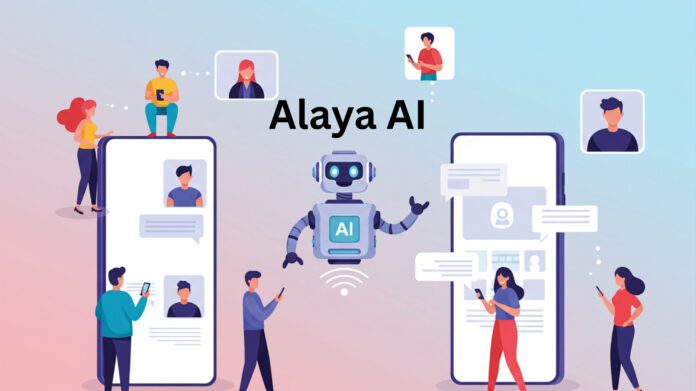
Alaya AI is a decentralized platform that combines artificial intelligence, blockchain technology, and social commerce to create a smart data collection and annotation ecosystem. It allows users (both individuals and enterprises) to contribute and label data in exchange for tokens while ensuring high levels of data privacy and accuracy.

The platform serves two primary purposes:

  1. Data Collection: Gathering diverse datasets via user interactions.
  2. Data Annotation: Providing a marketplace for accurate, community-driven data labeling.

Key Features of Alaya AI

1. Decentralized Ecosystem

Alaya operates on blockchain, ensuring trustless, transparent operations. Data contributors and annotators interact in a permissionless environment, enhancing security and participation.

2. AI-Powered Matching

Using advanced AI algorithms, Alaya matches tasks with suitable annotators based on expertise, past performance, and availability, ensuring high-quality results.

3. Token-Based Rewards

Users earn ALA tokens, Alaya’s native cryptocurrency, for contributing or annotating data. These tokens can be used within the ecosystem or traded on supported exchanges.

4. Gamification & Social Commerce

Gamified tasks and social incentives encourage more participation, turning data collection into an engaging experience.

5. DAO Governance

Alaya AI features a decentralized autonomous organization (DAO) structure where token holders can vote on platform upgrades, use of funds, and community guidelines.


Benefits of Using Alaya AI

FeatureBenefit
DecentralizationReduces reliance on centralized data brokers.
High-Quality DatasetsAI-driven validation ensures accuracy.
Incentivized ParticipationUsers are rewarded fairly for their contributions.
Cross-Industry ApplicationsSupports finance, healthcare, education, automotive, and more.
ScalabilityBuilt to handle large-scale datasets for enterprise-grade solutions.

Real-World Applications

???? Healthcare

Crowdsourced medical image annotations help train more accurate diagnostic tools.

???? Autonomous Vehicles

Users label road scenes, traffic signs, and pedestrian actions, improving self-driving algorithms.

????️ E-commerce

Data for product tagging, sentiment analysis, and recommendation engines is enhanced via community input.

???? Financial Services

Annotating financial reports, stock sentiment data, and news feeds boosts fintech AI tools.


Market Position and Competitive Edge

Alaya AI stands out in a market that includes players like Scale AI, Snorkel AI, and Appen. What gives it an edge is:

  • Blockchain-backed transparency
  • Lower cost for high-quality annotations
  • Scalable contributor network
  • Ethical and equitable data sourcing

Future Roadmap

QuarterMilestone
Q3 2025Launch of NFT-based contributor reputation system
Q4 2025Integration with major LLM training frameworks
Q1 2026Expansion to 10 new languages for multilingual annotations
Q2 2026Partnerships with global universities for research-based datasets

Alaya AI Token (ALA): Use Cases

  • Incentives for data contributors and annotators
  • Governance through voting mechanisms
  • Transaction Fees within the platform
  • Staking for passive income opportunities

How to Get Started with Alaya AI

  1. Sign Up: Create an account on the official Alaya AI website.
  2. Complete Tasks: Choose from available data labeling or collection tasks.
  3. Earn Tokens: Get rewarded in ALA tokens for quality contributions.
  4. Participate in DAO: Vote on future developments and proposals.

FAQs

What is Alaya AI used for?

Alaya AI is used for decentralized data collection and annotation, allowing contributors to earn rewards while helping train AI systems.

Is Alaya AI free to use?

Yes, anyone can join the platform for free and start contributing or creating data tasks.

How secure is my data on Alaya AI?

Very secure. It uses blockchain encryption and zero-knowledge proof protocols for data integrity and user privacy.

Where can I trade ALA tokens?

ALA tokens are listed on several decentralized and centralized exchanges, including Uniswap and Gate.io.


Conclusion

Alaya AI is not just a data platform; it’s a movement toward ethical, transparent, and decentralized AI development. By empowering individuals with the tools and incentives to contribute high-quality data, Alaya is setting the standard for the next generation of AI systems. Whether you’re a business needing labeled datasets or a contributor looking to earn from your time and skills, Alaya AI is the platform to watch.

Keep Reading:

QuantumLeap Computing: Ushering Quantum Technology into the Real World

1
QuantumLeap Computing

QuantumLeap Computing, based in Canada, is rapidly emerging as a trailblazer in quantum computing, turning decades of theoretical promise into practical, scalable applications. With a staggering $750 million Series B funding round led by Google Ventures and Singapore’s Temasek, and a current valuation of $4 billion, the company is advancing technologies that could redefine industries from cybersecurity to pharmaceuticals.


Real-World Impact: From Encryption to Drug Discovery

1. Breaking Encryption and Securing the Future

QuantumLeap is tackling one of the most urgent challenges in information technology: the vulnerability of classical encryption to quantum attacks. The company’s proprietary QuantumSecure™ framework leverages quantum algorithms capable of breaking traditional cryptographic systems while simultaneously developing robust, post-quantum encryption methods to replace them.

Already in pilot stages with major government agencies and financial institutions, QuantumSecure™ is being positioned as a critical layer of future-ready cybersecurity infrastructure.

2. Accelerating Drug Discovery with QSimEngine™

Drug discovery is another high-impact domain where QuantumLeap is making waves. Their QSimEngine™ can simulate molecular structures and interactions at an atomic level, something that would take traditional supercomputers weeks or months. This breakthrough capability is being utilized to design new cancer therapies, neurodegenerative disease treatments, and antivirals faster and more precisely than ever before.

Through partnerships with leading pharmaceutical companies, QuantumLeap aims to cut drug development timelines and costs significantly, ushering in a new era of personalized medicine.


Company Profile

  • Name: QuantumLeap Computing
  • Founded: 2019
  • Headquarters: Toronto, Canada
  • Industry: Quantum Computing, Cybersecurity, Pharmaceuticals, AI, Cloud Infrastructure
  • Valuation: $4 billion (as of 2025)

Leadership Team

  • Dr. Maya Chen, Co-Founder & CEO – A renowned quantum physicist and former MIT researcher with a background in scalable quantum systems.
  • Alex Ribeiro, CTO – Expert in quantum algorithms and cloud integration, formerly at Google AI.
  • Sophie Tran, Chief Product Officer – Previously led enterprise solutions at IBM Quantum.

Funding History

  • Seed Round (2020): $10M from university innovation funds and angel investors.
  • Series A (2022): $100M led by HorizonX and Inovia Capital.
  • Series B (2025): $750M co-led by Google Ventures and Temasek, with participation from BDC Capital and Coatue Management.

Key Investors

  • Google Ventures
  • Temasek Holdings
  • BDC Capital
  • Coatue Management
  • Inovia Capital

Products and Services

  1. QuantumSecure™ – Post-quantum encryption suite.
  2. QSimEngine™ – Quantum simulation platform for drug discovery.
  3. QuantumLeap Cloud (upcoming) – Enterprise-ready quantum access platform.
  4. Hybrid Quantum-Classical Toolkit – Tools for logistics, AI, and financial modeling.

Market Position and Strategy

QuantumLeap is strategically positioned at the intersection of quantum research and real-world demand. With government backing, enterprise partnerships, and an aggressive R&D roadmap, the company is competing with global leaders like IBM, Rigetti, and IonQ.

They target sectors where quantum advantages are most tangible: cybersecurity, pharmaceuticals, logistics, and finance. QuantumLeap’s go-to-market strategy combines cloud-based quantum access with enterprise consulting to accelerate adoption.


Frequently Asked Questions (FAQs)

What makes QuantumLeap different from other quantum startups?

QuantumLeap focuses on delivering enterprise-ready, real-world applications rather than just academic proof-of-concept hardware.

Is QuantumLeap’s quantum hardware proprietary?

Yes. The company has built custom quantum processors tailored for specific applications, especially in encryption and molecular modeling.

How can companies partner with QuantumLeap?

Partnership opportunities are available via the QuantumLeap Alliance Program for enterprise access, co-development, and R&D collaboration.

When will QuantumLeap Cloud be available?

The cloud platform is in beta testing and is expected to launch publicly in Q3 2025.

What industries are best suited for QuantumLeap’s services?

Cybersecurity, pharmaceuticals, defense, finance, and logistics are key focus areas where QuantumLeap offers immediate value.


Conclusion

QuantumLeap Computing is not merely advancing quantum science; it’s operationalizing it. With a world-class team, elite investors, and groundbreaking technologies, the company is transitioning quantum computing from theoretical marvel to a practical powerhouse. As industries brace for the quantum era, QuantumLeap is not just a participant—it’s a pioneer.

Also Read: Decagon AI: Transforming Enterprise Customer Support with Generative AI Agents

EmoBay: Revolutionizing Digital Mental Health Support from Hong Kong